Paris Agreement

Keep Focus on Climate

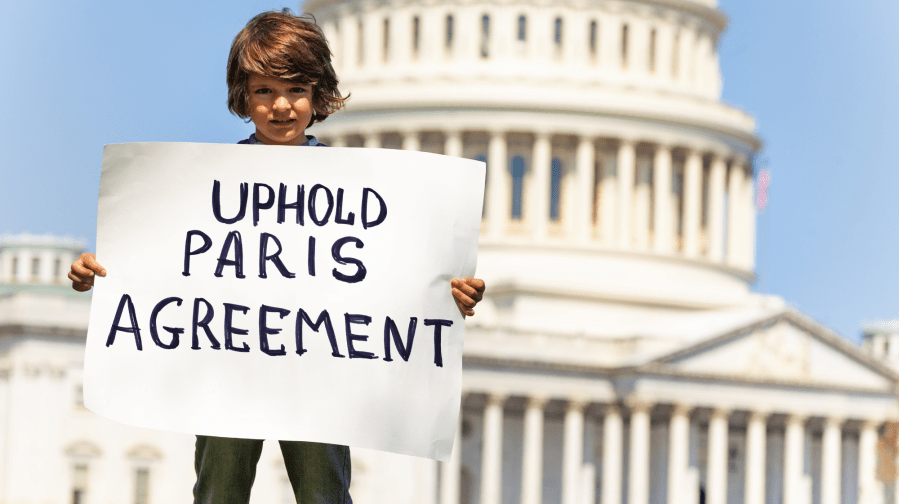
Re: Nov. 10 article, “World has strayed from Paris Agreement”

Nations of the world have been meeting every year for 30 years to address global warming. In 2015, the Paris Agreement was a major milestone by almost all countries to slow down the warming.

Institutions and governments at all levels have made a difference by investing in renewable energy to replace polluting fossil fuels, but it is not enough.

Each year since 2015 has been hotter than the year of the Paris Agreement; and since then, the U.S. has been hit by 193 disasters that cost at least $1billion for a total cost of $1.5 trillion. Adding human suffering to that, the impact is immeasurable.

Innovative research is happening everywhere to lower global warming pollutants and reduce loss of lives and livelihoods.

What we need is a political will to stay on the path and not dismantle what was started. Our leaders need to listen to us.

Austin American-Statesman

Kalpana Sutaria, Member, Austin Metro Chapter, Citizens’ Climate Lobby

Clean Energy

Support Bills that Boost Clean Energy and Texans’ Health

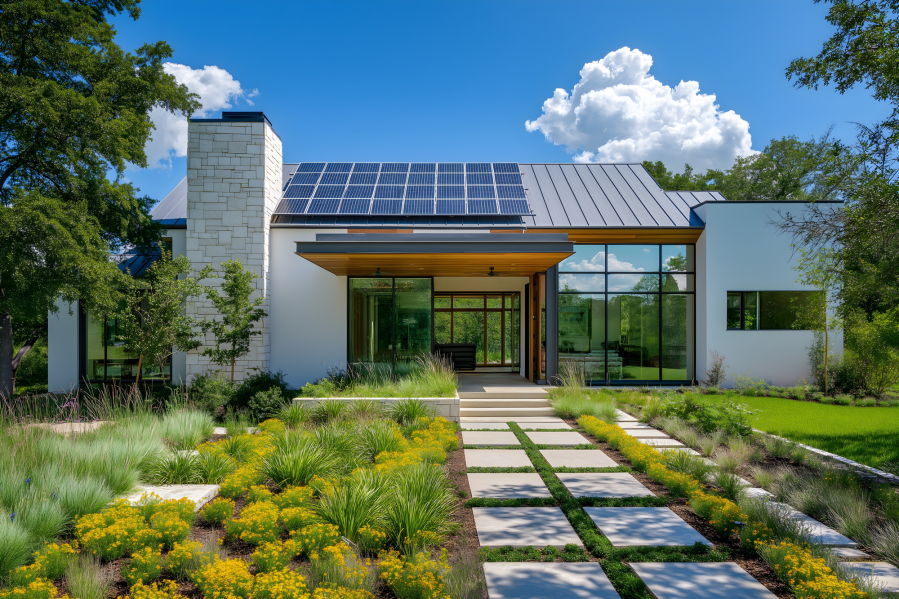
Generation of clean energy is a no-brainer for anyone who is worried about the warming world, extended summer seasons, rising electric bills for cooling and harmful pollution from burning fossil fuels. It allows many countries to reach clean energy goals, including the United Kingdom, which recently announced a policy for all new homes to be fitted with solar panels.

About 2.3 million Texans live within half a mile of active oil and gas operations and are directly affected by the toxic emissions, which can bring a higher risk of cancer, respiratory diseases and other health problems.

We urge lawmakers to approve bills this session to strengthen grid reliability and energy efficiency; improve solar panel review and installation; and expand energy resources and local energy independence. Those bills include House Bill 3069, SB 1915, HB 4374, HB 3826, SB 1202/HB 2304 and HB 3346.

Kalpana Sutaria, Citizens’ Climate Lobby, Austin Chapter and

Project Manager, Public Works, City of Austin

Published on May 11, 2025

Austin American-Statesman

Science

Science Underpins the Work of Citizens’ Climate Lobby

Citizens’ Climate Lobby bases its work and policy initiatives on scientific evidence. In fact, you can study and learn about the science behind climate change on the organization’s website in the section, “Climate Change Science.” Topics range from greenhouse gases to the role of carbon dioxide, ozone to the impact of human beings on the climate. Citizens’ Climate Lobby provides this information free of charge as a public service.

Another insightful training CCL provides is called, “Weather Attribution Science,” and it focuses on the background behind attribution science – the process of quantifying the contribution of global warming to extreme weather – and other events. The training includes a discussion about the process for connecting climate change with extreme weather events.

Extreme weather is a significant concern for citizens of the State of Texas. As Texas Tribune laments, “Texas weather extremes likely to become normal, scientists say” (2024). Alejandra Martinez and Yuriko Schumacher report, “Climate scientists and academics say that as emissions of heat-trapping greenhouse gases continue to push temperatures higher, severe weather in the state is likely to worsen. They add that Texas will likely see a growing gap between wet parts of the state and dry parts as climate change alters precipitation patterns and warms oceans.” You can also listen to the article by click on the link above.

More recently, on May 3, 2025 Guardian US shared, “Scientific societies to do climate assessment after Trump administration dismissed authors.”

Two major US scientific societies have announced they will join forces to produce peer-reviewed research on the climate crisis’s impact days after Donald Trump’s administration dismissed contributors to a key Congress-mandated report on climate crisis preparedness.

On Friday, the American Meteorological Society (AMS) and the American Geophysical Union (AGU) said that they will work together to produce over 29 peer-reviewed journals that will cover all aspects of climate change including observations, projections, impacts, risks and solutions.

The collaboration comes just days after Trump’s administration dismissed all contributors to the sixth National Climate Assessment, the US government’s flagship study on climate change. The dismissal of nearly 400 contributors had left the future of the study in question.

We are delighted to see the good work continue. Factual information, rather than gossip and misinformation, are the best way to make qualified, realistic and informed decisions when it comes to understanding and mitigating the effects of climate change, and to protecting the citizens of the State of Texas.

Megan Johnson wrote for Harvard T. H. Chan, “Stopping Misinformation: Scientists and Medical Professionals are Important Players in Communicating Reliable Information” (2025). She observes, “In a highly complex information ecosystem, news travels fast. Whether it’s dispersed through traditional news publications, social media, or fringe outlets, the news can get warped. That’s why communicators are trying to find the best ways to share their messaging accurately and promptly.”

It is great to see high level training being provided to the science community to help them deal with misinformation and to respond quickly. It would be great to see an educational program developed for the public as well. In the meantime, be sure to sign up on the Citizens’ Climate Lobby website for the fact- and science-based trainings discussed above.

Check out our Bluesky feed @cclatx!

One thing the Austin Chapter of CCL has learned since joining Bluesky during the final months of 2024, is that many scientists are active on the platform. You can find us at @cclatx.bluesky.social, and we do share scientific updates in addition to our own organizational information. If you are interested in science and the facts behind climate change, Bluesky is the place to be!

Once you join Bluesky, look under “Discover” and follow hashtags like #Science #Climate Science #Climate Politics #Climate Change Sciences #Climate Crisis #Climate & Sustainability #Climate Adaptation and more. You can also follow “Lists” like “Climate Science, Impacts and Solutions.” Katharine Hayhoe has several “starter packs” that help you quickly identify influential scientists to follow. Among them are, “US National Nature Assessment Authors,” “Climate Justice,” “Climate + Finance” (and more). Our experience on Bluesky has been terrific and we learn a lot every time we “log in.”

Science knows no country, because knowledge belongs to humanity, and is the torch which illuminates the world. Science is the highest personification of the nation because that nation will remain the first which carries the furthest the works of thought and intelligence.

Louis Pasteur, French scientist (1822-1895)

Omni Shoreham D.C.

CCL Summer Conference & Lobby Day in Washington, D.C.

This year’s summer conference July 20 to 22 will not be livestreamed. Follow the event on social media!

Did you know, in-person meetings with elected officials are highly effective. All In Together notes that meeting with your elected officials offers several advantages:

  • Build Relationships: In-person meetings help build credible, long-lasting relationships with legislators and their staff.
  • Memorable Advocacy: Face-to-face interactions allow you to convey your message in a more nuanced and memorable way.
  • Deepened Engagement: You can invite others to join the cause, building broader community support.

Consider a combination summer vacation to Washington, D.C. where you can: 1) participate July 20 to 22 in our CCL conference, gain deep insights into current climate issues, and support our work in a genuinely impactful way; and 2) relax and enjoy the many interesting and enjoyable sites in Washington, D.C.

As noted on the conference website, you can expect:

  • A jam-packed event dedicated to building the skills you need for Lobby Day.
  • Insight into today’s climate landscape and key perspectives on where CCL fits in.
  • To be with the best people in the world, doing the best work, for the best cause.

The conference will be held at the historic Omni Shoreham Hotel. “The Shoreham hosted every presidential inaugural ball of the 20th century since President Franklin Delano Roosevelt, and the Shoreham has also played host to a number of famous entertainers in the legendary Blue Room throughout its 90-year history.” The hotel is listed on the Historic Hotels of America website, as designated by the National Trust for Historic Preservation.

To reach the main hotel website and find a room to your liking, follow this link. Tripadvisor lists quite a few noteworthy places to visit near the Omni Shoreham, too!

Learn more about the history of the Omni Shoreham by clicking on the postcard.

Residential Solar in Austin

Creative Solar Program is What We Need to Transition from Fossil Fuels

Re: Oct. 13, article, ‘A new Austin solar program could unlock a clean energy future’

Generation of solar power is a no-brainer for anyone who is worried about the warming world, extended summer seasons, rising electric bills for cooling and harmful pollution from burning fossil fuels. Yes, we can’t meet all of needs from solar and other renewables, but it is allowing many countries in the world to reach clean energy goals.

Austin Energy‘s proposed Solar Standard Offer Program would add to the Community Solar program which allows residents to invest in solar-generated electricity without installing a solar system. It will allow more participants, including renters. Use of roof tops for solar has a benefit of reducing heat gain and reducing cooling loads .

Finding creative solutions to help us transition away from fossil fuels is what we want our lawmakers to pursue. Solar Standard Offer Program will create jobs and enhance quality of life. Let us support it.

Kalpana Sutaria

Project Manager, City of Austin and Member, Austin Metro Chapter, Citizen’s Climate Lobby

Published by the Austin American-Statesman

October 20, 2024

See also, “A new Austin solar program could unlock a clean energy future” by Kaiba White (October 12, 2024).

Electrify Your Home

Electrify Your Home: No Flames, No Fumes, No Fuss

This August, Citizens’ Climate Lobby is focused on one of its core issues: electrification.

But why should we electrify our homes?

  • With fossil fueled appliances in our home, the air we breathe inside is often dirtier than the air outside of them. Electrifying helps ensure your home is a safe haven, rather than a safety hazard.
  • Outdated, fossil fueled appliances use energy less efficiently, which drives up your energy usage – and your bills. When you electrify, your appliances will perform better and save you money in the long run.
  • Your wallet will thank you for electrifying your home. The incentives from the IRA: Inflation Reduction Act make it more affordable than ever. Don’t leave money on the table – take advantage of these incentives today!

CCL notes, “Fossil fuels are literally prehistoric. Bring your home into the modern age with electrification and reap the benefits of cleaner, safer energy.”

On a personal note, in the 1960s my Camp Fire troop in Southern California attended cooking classes at the local gas company. I have fond memories of those events, which were carefully orchestrated and enjoyable. Of course, we cooked on gas stoves. Today however, we know more about the health risks of gas appliances. Even the venerable chef Julia Child sang the praises of gas stoves. Vox notes in, “How the fossil-fuel lobby weaponized Julia Child’s gas stove” (November 2023):

Child had many stoves over her five-decade career, but she was famously devoted to one in particular: the Garland, a squat, six-burner gas range Child used in her home kitchen that cemented gas as her recommendation for professional and home chefs alike. The stove was so iconic that the Smithsonian has dedicated an exhibit to it.

KitchenAid shares a step-by-step guide to converting gas stoves to electric, should you be interested.

I notice that still today in Austin, there are apartment complexes being constructed with gas appliances. Some potential residents specifically look for complexes outfitted with gas appliances (see Every Austin Apartment with Gas Stoves by Everything Austin Apartments).

I am also a fan of historic home restoration and HGTV programs on that topic. The kitchens of historic homes are often outfitted with new versions of old gas stoves, so that they look just like the days when the homes were new. But is this safe?

Scientific American shares in, “The Health Risks of Gas Stoves Explained” (January 2023):

Gas stoves burn natural gas, which generates a number of invisible by-products. The biggest concern for human health is nitrogen dioxide (NO2). This gas is produced when natural gas is burned at high temperatures in the presence of nitrogen in the atmosphere, according to Josiah Kephart, an assistant professor in the department of environmental and occupational health at Drexel University. “We’ve known for a long time that [nitrogen dioxide] has many harmful effects on health,” he says.

Yet, some are still fighting to keep gas appliances in American homes. Vox notes:

In 2023, a mention doubting the safety of gas stoves made some politicians apoplectic. In January, the Consumer Product Safety Commission’s Richard Trumka Jr. set off a firestorm for raising the idea of a gas stove ban to which the Republican representative Ronny Jackson from Texas threatened “they can pry it from my cold dead hands.”

Maybe Hollywood – a key partner in the Julia Child and gas industry campaign back in the 1960s – can return to the topic of electrification, and encourage people to electrify their homes. Wouldn’t that be great!

Below you can download a helpful flier about electrifying your home courtesy of Citizen’s Climate Lobby. If you need more information, check out the CCL website and YouTube channel.

Carolyn M. Appleton, Citizens’ Climate Lobby volunteer (since 2017)

Response to April 27 Article, “Texas insurance among most expensive in nation”

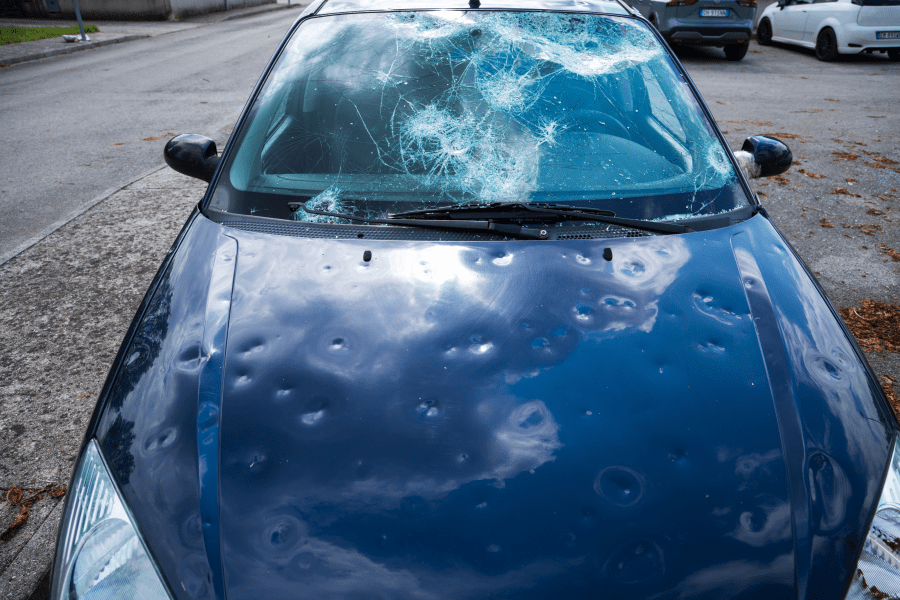
The year 2023 was not only the hottest year since 18501 but it was a particularly expensive time for storm damage, mainly because of hail. In fact, hail of at least 1 inch fell over 10 million homes and apartment buildings in the U.S. from mid-March through November. Texas led the nation in the number of buildings damaged2.

North Austin and Round Rock residents were hit by a hailstorm in August that severely damaged my roof. In September both Travis and Williamson Counties suffered the costliest hail damage. Insurance companies in Texas are raising the costs to protect their businesses in vulnerable states.

Who suffers? Common people who must pay high insurance or are left with options that degrade lives. Climate change intensifies storms that increase damages. Ask your lawmakers to take actions to reduce global warming from fossil fuels, transition to clean energy future and improve well being of Texans.

Kalpana Sutaria

Project Manager, City of Austin and Member, Austin Metro Chapter, Citizens’ Climate Lobby

Submitted to the Austin American-Statesman

May 2024

References

What do Texans Want on Earth Day 2024?

The year 2023 was the hottest year since 1850 exceeding the previous record set by 2016 per the Berkley Earth. Austinites experienced the record-breaking temperatures last summer with meteorologists raising alarms for outdoor workers. The state climatologist Dr. John Neilson-Gammon has assessment report of extreme weather in Texas as it continues to worsen.

The State of Texas is a leader in oil and gas production, and it leads the nation in wind power generation, and it is almost at the top in generation of solar power. It is also the largest emitter of greenhouse gases in our nation. Without Texas, our nation cannot decarbonize itself. If Texas were a country, it would be the eighth largest economy and the eighth largest emitter of greenhouse gas emissions in the world. Texas’ actions to curb emissions would hugely improve the environment.

With these facts, the Citizens’ Climate Lobby’s (CCL) leadership approached the Texas State Legislature in its 2023 session. Legislative sessions are held once every two years for 140 days. It is difficult for constituents to bring up issues to state lawmakers, when work of all committees and two state houses must be sorted through the number of bills filed, in a very short time. Important issues remain unaddressed.

Policy decisions made by Texas Legislature affect the energy industry as well as Texans. How we generate and transport energy has a profound impact on our environment. The major ask of 10,000 volunteers of CCL was to improve the electric grid that transmits electricity from power plants to consumers. The problem was that transmission lines were not adequate to transmit all renewable energy that was generated, creating a backlog. CCL volunteers held 66 meetings with the state representatives of both parties. A year later, the backlog still exists, and transmission lines are not fully fixed. Generated energy’s backlog, and transmission bottlenecks such as these cost Texans over $5 billion in 2022 and 2023. Consumers, the State, and the environment – all of them will benefit if lawmakers enact the right policies.

Methane leaks from oil and gas production in Texas hugely affect the environment because methane is a potent greenhouse gas that is 80 times more warming than carbon dioxide (CO 2 ). It stays in the air for decades rather than for centuries like CO2 does. Methane leaks and gas flaring are known to the authorities and oil and gas producers. Texas regulators have not enforced them fully. The new climate regulation by the Environmental Protection Agency (EPA) will require the oil and gas operators to reduce methane leaks. Per EPA, these rules can prevent equivalent of 1.5 billion tons of CO2 being emitted between 2024 and 2038, almost equal to emissions by all power plants in the country in 2021. Fixing methane leaks helps the operators too, but still Texas has challenged the rules.

CCL supports climate solutions that grow economic opportunities, that are market based, cost effective, efficient and are implemented in a socially equitable manner. The climate crisis has highlighted the already existing inequities. It is worse for those who have fewer resources to live through any type of climate disasters – like flooding, drought, wildfires, sea level rise, extreme heat or cold – causing physical and psychological stress on people.

We must not forget that global warming continues to accelerate. The Inflation Reduction Act (IRA) is delivering positive outcomes to combat the climate crisis. The State of Texas can take advantage of many available opportunities for emissions reductions in the IRA helping Texans. It has tax benefits for removal of accumulated carbon in the atmosphere for businesses.

On this Earth Day, we want lawmakers to implement all policies to lower emissions and improve health and well-being of Texans.

Kalpana Sutaria

Project Manager, City of Austin and Member, Austin Metro Chapter, Citizens’ Climate Lobby

Submitted to the Austin American-Statesman

April 2024

  1. Rohde, Robert (2024), Global Temperature Report for 2023.
  2. Texas Economic Development Corporation, “Texas Economic Strength.”
  3. Environment Texas, “The Top Ten Biggest Global Warming Polluters in Texas.”
  4. Grid Monitor, The Texas grid did its job during the freeze, but the job’s not done.
  5. IEA, Methane and Climate Change.
  6. Federal Register, EPA Methane regulations issued on March 8, 2024.

Pew Research: 63% of Americans Say Harm to People in the U.S. from Climate Change Will Get Worse in Their Lifetime

An insightful study by Pew Research Center last fall showed a high percentage of Americans believe climate change will have a negative impact on the places where they live and work. When it comes to the personal impact of climate change, most Americans believe they will have to make at least minor sacrifices over their lifetimes because of climate change. Pew Research Center (October 2023)

What does this mean for Citizens’ Climate Lobby? We need to enlist more young people as volunteers and advocates in our work, but also, we need to do a better job of convincing people of all ages and political persuasions that climate change is a real threat. We have work to do.

An important finding of the Pew Research report that is key to Citizens’ Climate Lobby is, “when it comes to the federal government, 47% think it can help a lot to reduce the effects of climate change; 40% say this about cities and communities.”

This is where Citizens’ Climate Lobby excels. Our organization empowers people of all ages and political persuations to work together on climate policy. Our supporters are organized into more than 400 chapters across the United States – including the Austin Metro Chapter – building support in Congress for a national bipartisan solution to climate change.

In order to pass climate policy, Congress must hear a chorus of many different voices. Citizens’ Climate Lobby works with members of Congress across the political spectrum to find common ground on climate change action.

Texas in particular is at risk because of global warming. The EPA notes in its 2016 report, “What Climate Change Means for Texas”:

Texas’s climate is changing. Most of the state has warmed between one-half and one degree (F) in the past century. In the eastern two-thirds of the state, average annual rainfall is increasing, yet the soil is becoming drier. Rainstorms are becoming more intense, and floods are becoming more severe. Along much of the coast, the sea is rising almost two inches per decade. In the coming decades, storms are likely to become more severe, deserts may expand, and summers are likely to become increasingly hot and dry, creating problems for agriculture and possibly human health.

It is our hope that responsible business and elected leaders from all political viewpoints will realize climate change has – and will continue to have – a significant impact on the ever growing population of Texas. And not all of that impact will be positive. There are many things that can be done to better prepare our state and its citizens, including creating and adjusting policies at the local, state and national levels.

If you fall into the above leadership categories, reach out to Citizens’ Climate Lobby for assistance with timely, factual information. We are on point at your convenience and that of your staff members, and as always, we are nonpartisan in our approach.

To reach our Chapter, the following are available to assist, or use the secure contact form on this website to reach us. Thank you!

Media – Kalpana Sutaria: kalpana.sutaria@usa.net
Lobbying – Bruce Miglin: bmiglin@comcast.net
Group Organization and Development – Cynthia Lesky: cynthia.lesky@gmail.com
Grassroots (tabling) – Jessy Eubanks: jessyeubanks@gmail.com


United States Senate

Constitution of the United States

Written in 1787, ratified in 1788 … the United States Constitution is the world’s longest surviving written charter of government. Its first three words – “We The People” – affirm that the government of the United States exists to serve its citizens. The supremacy of the people through their elected representatives is recognized in Article I, which creates a Congress consisting of a Senate and a House of Representatives. The positioning of Congress at the beginning of the Constitution affirms its status as the “First Branch” of the federal government.

LTE Under Consideration: COP28 – Progress, Yes! But We Need More

Re: December 14, 2023, Statesman article, “Nations across globe agree to transition away from fossil fuels”

Nearly 200 nations agree for the first time to transition away from fossil fuels. A step in the right direction with spirit of cooperation but it is a small step. In 2015, nations agreed to limit global warming to 1.5 degree Celsius above pre-industrial times. Despite ramping up of renewable power and energy efficiency to reduce emissions, warming has reached 1.2 degrees Celsius above the mid 1800s. Temperatures are trending up, not stabilizing due to large amounts of COthat has collected in the atmosphere that would continue to warm even if we stop burning fossil fuels today.

Like the Paris Accord, these agreements by nations are non-binding and aspirational. The COP28 agreement allows loopholes to powerful oil producing countries.

What can citizens of these countries do?  Reach out to your lawmakers, demand investments and policies to lower use of fossil fuels for improvement to health and well-being of people.

Kalpana Sutaria

Project Manager, City of Austin and Austin Metro Chapter, Citizens’ Climate Lobby

Submitted to the Austin American-Statesman

December 14, 2023