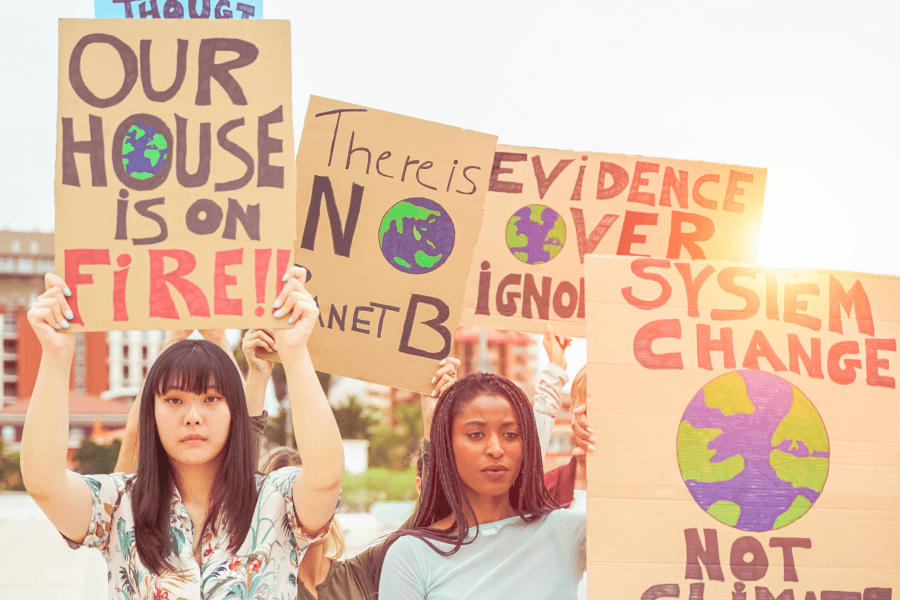
Climate change affects mental health.

May is Mental Health Awareness Month and “Solastalgia”

The American Psychiatric Association notes that ecological grief and eco-anxiety arise from the sense of loss or the anxiety people feel related to climate change, including the loss of a stable future. The term “solastalgia” has been coined to describe the nostalgia we feel for a traditional way of life destroyed by environmental changes. While eco-anxiety is a normal response to the climate emergency, “it may shape views of society and the future, leading to anger, hopelessness, or paralysis, particularly in young people.” Emotional burnout and despair can plague activists when progress towards sustainability seems to fail.

Mental Health Awareness Month was launched in 1949. Over time, climate change has become a leading cause of concern globally. In 2022, WHO: World Health Organization shared a policy brief that urges countries to include mental health support in their response to the climate crisis. The brief shares some eye-opening statistics:

There are only 13 mental health workers per 100,000 people;

25% of years lived with disability are caused by mental (14.6%), neurological (7.6%) and substance use (2.7%)
disorders;

1 billion is the number of people worldwide living with a mental disorder;

$1 trillion is the annual cost of common mental disorders; and

Only 2% of government health budgets are spent on mental health.

The World Health Organization policy brief recommends 5 approaches for governments to address the mental health impacts of climate change:

  • Integrate climate considerations with mental health programmes;
  • Integrate mental health support with climate action;
  • Build upon global commitments;
  • Develop community-based approaches to reduce vulnerabilities; and
  • Close the large funding gap that exists for mental health and psychosocial support.

What is the definition of mental health? World Health Organization defines it as, “a state of well-being in which every individual realizes his or her own potential, can cope with the stresses of life, can work productively and fruitfully and is able to make a contribution to her or his community.” This is a laudable statement and one to which all nations should aspire.

SAMHSA: Substance Abuse and Mental Health Services Administration recognizes that, “behavioral health issues resulting from climate-related disasters may include stress, anxiety, depression, posttraumatic stress disorder, and increases in both substance use and violence. Older adults, children, and individuals experiencing homelessness are more likely to be psychologically vulnerable to disasters. Populations particularly vulnerable to climate change include older adults, children, pregnant women, individuals experiencing homelessness, persons with behavioral health conditions (e.g., those taking certain psychiatric medications), people with lower incomes, individuals with limited English proficiency, migrants or refugees, communities of color, and tribes and indigenous peoples.”

We have work to do in the arena of mental health. Please make yourself aware of the resources shared in this article, and those to which we have linked below. And please consider joining Citizens’ Climate Lobby and the Austin Metro Chapter! If you get involved in our nonpartisan, forward-thinking and solution-oriented activities, you can have a positive impact and be surrounded by others who share your concerns.

Additional resources:

NAMI HelpLine | National Alliance on Mental Health

Mental Health Texas | Find a provider and more information

SAMHSA operates a Disaster Distress Helpline, and you can find it by following this link.

Texas Tribune | Guide: How to care for your mental health in the age of climate change and worsening natural disasters

Carolyn M. Appleton has been a member of Citizens’ Climate Lobby since 2017, when she took over curation duties for the @cclatx Twitter feed, which is now X. She is the author of Carolyn’s Nonprofit Blog, established in 2011.

What do Texans Want on Earth Day 2024?

The year 2023 was the hottest year since 1850 exceeding the previous record set by 2016 per the Berkley Earth. Austinites experienced the record-breaking temperatures last summer with meteorologists raising alarms for outdoor workers. The state climatologist Dr. John Neilson-Gammon has assessment report of extreme weather in Texas as it continues to worsen.

The State of Texas is a leader in oil and gas production, and it leads the nation in wind power generation, and it is almost at the top in generation of solar power. It is also the largest emitter of greenhouse gases in our nation. Without Texas, our nation cannot decarbonize itself. If Texas were a country, it would be the eighth largest economy and the eighth largest emitter of greenhouse gas emissions in the world. Texas’ actions to curb emissions would hugely improve the environment.

With these facts, the Citizens’ Climate Lobby’s (CCL) leadership approached the Texas State Legislature in its 2023 session. Legislative sessions are held once every two years for 140 days. It is difficult for constituents to bring up issues to state lawmakers, when work of all committees and two state houses must be sorted through the number of bills filed, in a very short time. Important issues remain unaddressed.

Policy decisions made by Texas Legislature affect the energy industry as well as Texans. How we generate and transport energy has a profound impact on our environment. The major ask of 10,000 volunteers of CCL was to improve the electric grid that transmits electricity from power plants to consumers. The problem was that transmission lines were not adequate to transmit all renewable energy that was generated, creating a backlog. CCL volunteers held 66 meetings with the state representatives of both parties. A year later, the backlog still exists, and transmission lines are not fully fixed. Generated energy’s backlog, and transmission bottlenecks such as these cost Texans over $5 billion in 2022 and 2023. Consumers, the State, and the environment – all of them will benefit if lawmakers enact the right policies.

Methane leaks from oil and gas production in Texas hugely affect the environment because methane is a potent greenhouse gas that is 80 times more warming than carbon dioxide (CO 2 ). It stays in the air for decades rather than for centuries like CO2 does. Methane leaks and gas flaring are known to the authorities and oil and gas producers. Texas regulators have not enforced them fully. The new climate regulation by the Environmental Protection Agency (EPA) will require the oil and gas operators to reduce methane leaks. Per EPA, these rules can prevent equivalent of 1.5 billion tons of CO2 being emitted between 2024 and 2038, almost equal to emissions by all power plants in the country in 2021. Fixing methane leaks helps the operators too, but still Texas has challenged the rules.

CCL supports climate solutions that grow economic opportunities, that are market based, cost effective, efficient and are implemented in a socially equitable manner. The climate crisis has highlighted the already existing inequities. It is worse for those who have fewer resources to live through any type of climate disasters – like flooding, drought, wildfires, sea level rise, extreme heat or cold – causing physical and psychological stress on people.

We must not forget that global warming continues to accelerate. The Inflation Reduction Act (IRA) is delivering positive outcomes to combat the climate crisis. The State of Texas can take advantage of many available opportunities for emissions reductions in the IRA helping Texans. It has tax benefits for removal of accumulated carbon in the atmosphere for businesses.

On this Earth Day, we want lawmakers to implement all policies to lower emissions and improve health and well-being of Texans.

Kalpana Sutaria

Project Manager, City of Austin and Member, Austin Metro Chapter, Citizens’ Climate Lobby

Submitted to the Austin American-Statesman

April 2024

  1. Rohde, Robert (2024), Global Temperature Report for 2023.
  2. Texas Economic Development Corporation, “Texas Economic Strength.”
  3. Environment Texas, “The Top Ten Biggest Global Warming Polluters in Texas.”
  4. Grid Monitor, The Texas grid did its job during the freeze, but the job’s not done.
  5. IEA, Methane and Climate Change.
  6. Federal Register, EPA Methane regulations issued on March 8, 2024.
Actions Teams

CCL Action Teams: A Place for Everyone

Action Teams are organized around specific interests and affiliations. Each team hosts its own meetings and most are national if not international in membership. Action Teams work to create the political will for a livable world. By creating Action Teams, Citizens’ Climate Lobby demonstrates its commitment to diversity and inclusion.

Consider joining an Action Team! For example, here are a few of many options.

In order to join an Action Team, you need to become a CCL member. That is free and you can learn more by signing up on the national office secure communication platform.

In addition, we wanted to share a recent webinar that shares a wide range of timely information. About the speakers:

“Karina Ramirez and Drew Eyerly present, ‘Understanding What You Don’t Understand,’ which outlines the importance of working together while embracing differences. Andrew (Drew) Eyerly serves as CCL’s Conservative Outreach Director, where he lends a conservative voice and perspective to the organization’s mission while working to recruit, engage, and retain right-of-center volunteers. Prior to joining CCL, Drew served in the United States Army for 12 years as a Preventive Medicine Specialist and as a Medic completing tours in both Iraq and Afghanistan. Karina Ramirez (She/Her/Ella) joined CCL as a volunteer in 2017 and has served as CCL’s Diversity & Inclusion Director since 2018. In this role, she supports volunteers and staff working toward inclusion and belonging efforts. Karina is originally from Ecuador and lives in West Palm Beach, Florida.”

Pew Research: 63% of Americans Say Harm to People in the U.S. from Climate Change Will Get Worse in Their Lifetime

An insightful study by Pew Research Center last fall showed a high percentage of Americans believe climate change will have a negative impact on the places where they live and work. When it comes to the personal impact of climate change, most Americans believe they will have to make at least minor sacrifices over their lifetimes because of climate change. Pew Research Center (October 2023)

What does this mean for Citizens’ Climate Lobby? We need to enlist more young people as volunteers and advocates in our work, but also, we need to do a better job of convincing people of all ages and political persuasions that climate change is a real threat. We have work to do.

An important finding of the Pew Research report that is key to Citizens’ Climate Lobby is, “when it comes to the federal government, 47% think it can help a lot to reduce the effects of climate change; 40% say this about cities and communities.”

This is where Citizens’ Climate Lobby excels. Our organization empowers people of all ages and political persuations to work together on climate policy. Our supporters are organized into more than 400 chapters across the United States – including the Austin Metro Chapter – building support in Congress for a national bipartisan solution to climate change.

In order to pass climate policy, Congress must hear a chorus of many different voices. Citizens’ Climate Lobby works with members of Congress across the political spectrum to find common ground on climate change action.

Texas in particular is at risk because of global warming. The EPA notes in its 2016 report, “What Climate Change Means for Texas”:

Texas’s climate is changing. Most of the state has warmed between one-half and one degree (F) in the past century. In the eastern two-thirds of the state, average annual rainfall is increasing, yet the soil is becoming drier. Rainstorms are becoming more intense, and floods are becoming more severe. Along much of the coast, the sea is rising almost two inches per decade. In the coming decades, storms are likely to become more severe, deserts may expand, and summers are likely to become increasingly hot and dry, creating problems for agriculture and possibly human health.

It is our hope that responsible business and elected leaders from all political viewpoints will realize climate change has – and will continue to have – a significant impact on the ever growing population of Texas. And not all of that impact will be positive. There are many things that can be done to better prepare our state and its citizens, including creating and adjusting policies at the local, state and national levels.

If you fall into the above leadership categories, reach out to Citizens’ Climate Lobby for assistance with timely, factual information. We are on point at your convenience and that of your staff members, and as always, we are nonpartisan in our approach.

To reach our Chapter, the following are available to assist, or use the secure contact form on this website to reach us. Thank you!

Media – Kalpana Sutaria: kalpana.sutaria@usa.net
Lobbying – Bruce Miglin: bmiglin@comcast.net
Group Organization and Development – Cynthia Lesky: cynthia.lesky@gmail.com
Grassroots (tabling) – Jessy Eubanks: jessyeubanks@gmail.com


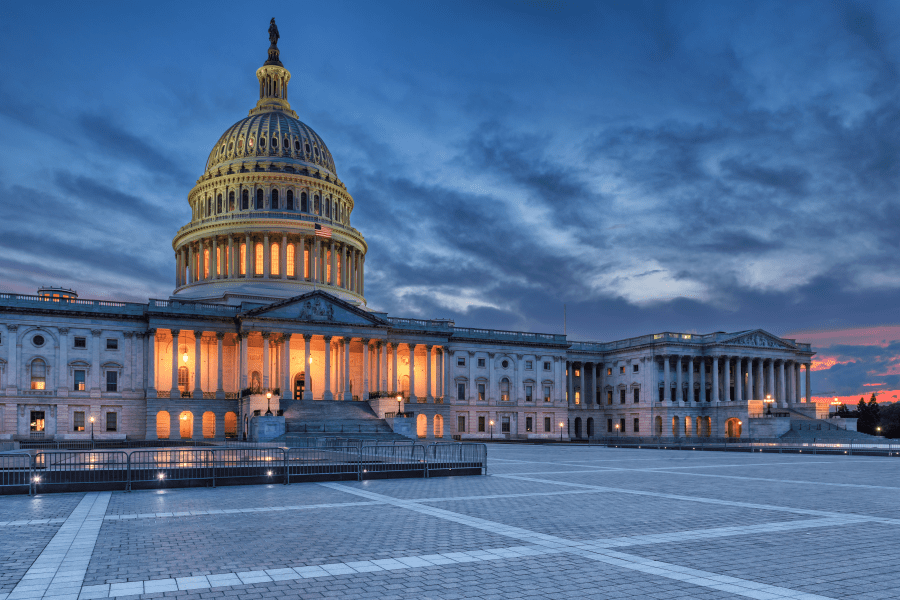
United States Senate

Constitution of the United States

Written in 1787, ratified in 1788 … the United States Constitution is the world’s longest surviving written charter of government. Its first three words – “We The People” – affirm that the government of the United States exists to serve its citizens. The supremacy of the people through their elected representatives is recognized in Article I, which creates a Congress consisting of a Senate and a House of Representatives. The positioning of Congress at the beginning of the Constitution affirms its status as the “First Branch” of the federal government.
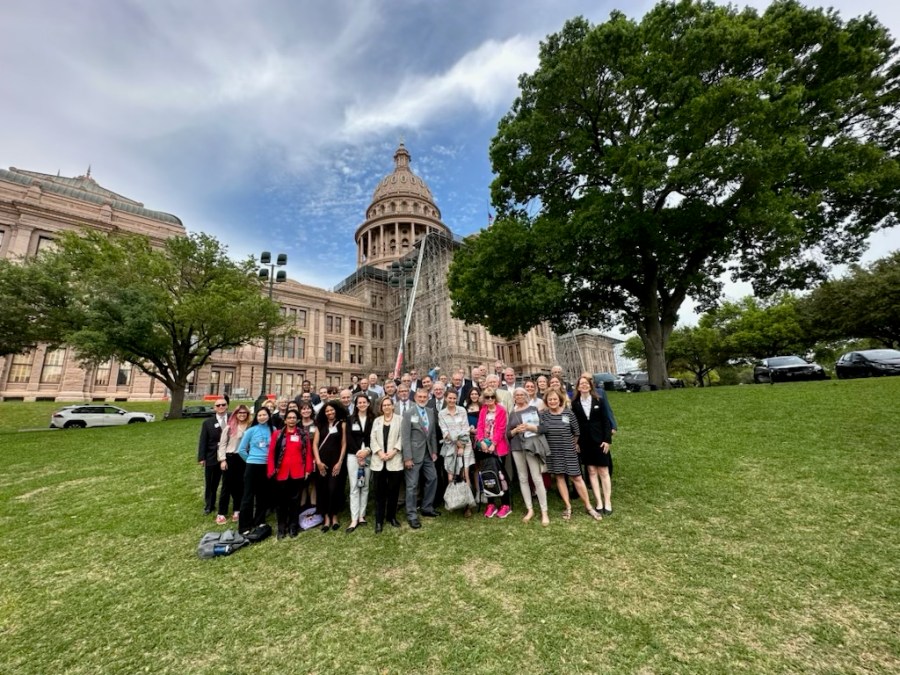
Lobby Day Volunteers

Year in Review & Holiday Greetings from Susan Adams, CCL Coordinator, Third Coast Region

Holiday greetings to our generous Third Coast climate donors!

I wanted to express my heartfelt gratitude for your generosity to Citizens’ Climate Education Third Coast in 2023. Thanks to you and the other amazing supporters from around the region, we were able to have hit impactful milestones like the following:

  • Hosted our first ever Texas State Lobby Day in Austin in March, where 81 volunteers from across Texas met with 66 State House and Senate offices to talk about transmission bills.
  • Held our 9th Annual Regional Conference in New Orleans, making it our most inclusive ever by offering 50 tree ticket waivers, 42 free/discounted student tickets, and 21 travel grants (see the highlight video here).
  • Funded $6,000 in travel scholarships to 13 volunteers so that they could attend our CCL National Conference and Lobby Day in Washington, D.C. in June. 
  • Funded several rural outreach events, including the 3-day Feather Fest in Galveston, Texas in April, sending volunteers from Lubbock to Odessa, Texas to participate in a public EPA air pollution hearing, hosting a chapter relaunch in College Station, Texas, and hosting a holiday gathering in Southaven, Missippi. 
  • Supported fund raising efforts like the Austin chapter’s Tour Divide fundraising appeal.
  • Provided over $4,000  in chapter support, including tabling materials, food, and event fees for student chapters at Concordia University and Texas A&M University, and smaller chapters throughout Mississippi, Louisiana and Arkansas.

Please read more about the amazing successes of our Texas State Lobby Day and 9th Annual Regional Conference in New Orleans in these reports:

Looking to 2024, we plan to use our donor funds to support initiatives like the following:

  • Support 2024 Regional Chapter Expansion, targeting outreach events to launch or revive 15 targeted chapters in our newly enlarged Third Coast Plus region, which now includes Arkansas, Louisiana, Mississippi, Oklahoma, and Texas. Tentative targets include Corpus Christi, El Paso, Galveston, Baton Rouge and Shreveport.
  • Fund travel scholarships from across our region for the CCL National Conference in Washington, D.C., June 8 – 12.
  • Support our 10th annual Regional Conference being tentatively scheduled for October 5 at Texas A&M University Galveston. Our ability to offer free tickets and travel grants is crucial to making these events inclusive.
  • Support Get Out the Vote efforts throughout the region, including candidate climate policy forums, postcards campaigns, and more.

Want to pitch in for 2024? You can donate through our webpage here at any time! 

Finally, I’d like to share a brief video our program team created last week in honor of all that our CCL volunteers accomplished, through your support, in 2023! I can’t wait to see what we accomplish in 2024. 

Have a wonderful holiday,

Susan Adams, Coordinator for the Third Coast Region

LTE Under Consideration: Ask lawmakers to support policies to promote clean energy to reduce CO2 emissions

Re: March 3, 2023 article, “Carbon dioxide emissions reached a record high in 2022”

Scientist Charles Keeling started taking measurements of atmospheric carbon dioxide (CO2) at Mauna Loa every day since 1958. His laboratory provided a continuous record showing the upward trajectory. Consumption of fossil fuels drives up the CO2 emissions every year. The only exception was in 2020 due to reduction in travel during the Pandemic.

Once added, CO2 stays in the atmosphere for 300 to 1000 years. CO2 emissions reached a record high in 2022 despite increase in solar and wind power generation. CO2 and other greenhouse gas emissions block the heat from escaping causing global warming. Climate scientists have shown how warming intensifies extreme weather events which devastate our lives and livelihoods in different ways. Allergies and pollution have affected me greatly.

Ask your lawmakers to support policies to promote clean energy to reduce CO2 emissions. It indeed is a monumental task but sorely needed to improve our health and wellbeing.

Kalpana Sutaria

Project Manager, City of Austin and Member, Citizens’ Climate Lobby Austin

Submitted to the Austin American-Statesman

March 2023

LTE Under Consideration: Support the Bi-partisan RISEE Act

Re:  Dear Senator Cornyn and Cruz – Please support the bi-partisan RISEE Act

The Reinvesting in Shoreline Economies and Ecosystems (RISEE) Act was introduced in the 118th Congress by Senators Whitehouse (D-RI) and Cassidy (R-LA). Sea level rise, storm surge, increase in ocean temperatures and acidification from climate change are harming coastal communities and will continue to do so unless emissions are dramatically reduced. 25 million Americans including Texans are vulnerable to coastal flooding.

The RISEE act would create an offshore revenue sharing model and would direct portion of revenue generated by off-shore wind projects toward vulnerable coastal communities who must use it for coastal restoration, conservation or infrastructure. The RISEE act ensures that National Offshore Coastal Security Fund and Gulf of Mexico energy Security Act funding are protected from sequestration.

Future is bright for offshore wind energy which grew 24% from early 2020 through early 2021. Ask our senators to support this bi-partisan RISEE Act and help coastal communities of our state.

Kalpana Sutaria

Project Manager, City of Austin and Member, Citizens’ Climate Lobby Austin Chapter

Submitted to the Austin American-Statesman

March 2023

LTE Under Consideration: Adaptation decisions and financing adaptation increasingly essential

Re: February 19, 2023 article, “How climate change can impact your finances?”

As climate impacts accelerate, adaptation decisions and financing adaptation become increasingly essential to all communities, developed or developing countries. Property damages from hurricanes, floods, droughts, sea level rise, hail, wind, tornadoes and wildfires can devastate families when insurance companies are not able fully cover them. People with means could manage to withstand damages and even support funds that use environmental, social and governance factors. Others have to rely on government help.

Inflation Reduction Act passed by the U.S. Congress has allocated funding if our state would take necessary steps. It would expedite electrification, fund climate-smart agriculture including conservation and reduce Methane to help lower harmful emissions that intensify climate disasters impacting our finances.

We want state leaders to phase out fossil fuels subsidies and invest in clean energy instead of punishing financial institutions who support such transition. Our leaders can and should improve finances of Texans by addressing climate change.

Kalpana Sutaria

Project Manager, City of Austin and Member, Citizens Climate Lobby Austin Chapter

Submitted to the Austin American-Statesman

February 2023

CCL hosts valuable conferences

Opinion: Republican-controlled House Blows the Doors Open for Conservative Climate Action | March 28 and 29, 2023

With many years of hands-on work experience with nonprofit organizations focused on protecting the environment – many of those groups having influential conservative backers – I know there is conservative interest in protecting our shared natural resources. The way conservatives choose to accomplish that goal differs from some of our more progressive advocates for environmental protection, however.

Without an alternative approach to environmental policy, conservatives can feel boxed in, forced to claim environmental problems either are a “hoax” or not as serious as environmentalists claim. This is, indeed, sometimes the case. But where there is real pollution or other problems of environmental degradation, the standard conservative line of defense is untenable. Lacking effective policy alternatives, each fight over environmental issues that conservatives lose necessarily means more government expansion. For those who believe in the American ideals of freedom and free enterprise, the path ahead is one of slow but inevitable retreat.

A conservative approach to environmental principles, R Street Institute

Citizens’ Climate Lobby understands this well.

How is the fight against climate change conservative? Through policies that avoid big government overreach, CCL advocates for legislation that spurs the economy, makes the country economically competitive, aids the military, provides resources to agriculture, and preserves the great American outdoors.

Citizens’ Climate Lobby

Citizen’s Climate Lobby supporters are organized into local chapters like ours, and each chapter works with their members of Congress to enact climate change solutions. Conservative CCL supporters hail from all over the country and from different religious backgrounds, but all share Conservative principles. If you are so-inclined, you might consider joining the CCL national Conservative Caucus Action Team, and attend its online meetings!

And consider attending the March 28 and 29, 2023 conference in Washington, D.C., which is focused specifically on conservative solutions to alleviate the negative effects of climate change.


Be in the room where conservative climate action happens. Come to the Conservative Climate Leadership Conference in Washington, D.C. (yes, in person), to connect with right-leaning CCLers, eco-right orgs, and members of Congress to discuss solutions that address climate, the economy, and U.S. competitiveness. You’ll become an expert on the conservative merits of CCL’s policy agenda and be ready to talk to House Representatives and Senators on day two, our lobby day on the Hill. This conference is designed for politically right-leaning attendees.

Citizens’ Climate Lobby

Carolyn M. Appleton

Member, Citizens’ Climate Lobby Austin Chapter

Opinion: World Economic Forum Helps Our World Move Forward

I was inspired by watching a few of this year’s World Economic Forum proceedings online. I believe those involved are charting a positive course forward for the world at a high level, contrary to some public figures who have recently decried its usefulness.

As noted in Wikipedia,

The World Economic Forum (WEF) is an international non-governmental and lobbying organisation based in Cologny, canton of Geneva, Switzerland. It was founded on 24 January 1971 by German engineer and economist Klaus Schwab. The foundation, which is mostly funded by its 1,000 member companies – typically global enterprises with more than US$5 billion in turnover – as well as public subsidies, views its own mission as “improving the state of the world by engaging business, political, academic, and other leaders of society to shape global, regional, and industry agendas.”

Such a safe meeting format does need to exist for productive dialogue to occur amongst industrial, political, and social leaders. To make true change sink deeply into corporate and governmental systems, lighting cars on fire, throwing soup on priceless paintings, and smashing small business storefronts will not create a deep and lasting positive impact. But it will certainly scare everyone, at all levels of society. A quiet and secure environment for meaningful dialogue among those who can have significant impact on global systems – particularly those related to climate change – makes perfect sense.

I believe peaceful protest is a human right. “Nonviolent resistance has been shown empirically to be twice as effective as armed struggle in achieving major political goals,” notes the United States Institute of Peace. Yes, let us continue to protest, but peacefully. And I think we need to let go of the idea that everyone can participate in high level meetings like those of the World Economic Forum. WEF has made video recordings of its meetings available for remote viewers, and it publishes information about its accomplishments online routinely. Social media allows every human being with access to it, the opportunity to share opinions online. Let us all continue to share our opinions and concerns in this way, respectfully.

As the third Monday of January is celebrated as Martin Luther King, Jr. Day, I thought it would be appropriate to share MLK’s approach to nonviolence.

King did not experience the power of nonviolent direct action first-hand until the start of the Montgomery bus boycott in 1955. During the boycott, King personally enacted Gandhian principles. With guidance from black pacifist Bayard Rustin and Glenn Smiley of the Fellowship of Reconciliation, King eventually decided not to use armed bodyguards despite threats on his life, and reacted to violent experiences, such as the bombing of his home, with compassion. Through the practical experience of leading nonviolent protest, King came to understand how nonviolence could become a way of life, applicable to all situations. King called the principle of nonviolent resistance the “guiding light of our movement. Christ furnished the spirit and motivation while Gandhi furnished the method” (Papers 5:423).

The Martin Luther King, Jr. Research and Education Center at Stanford

Returning to Austin as I conclude, I was delighted to learn during this year’s WEF meetings, “World Economic Forum Launches the Centre for Trustworthy Technology.” The new Centre in Austin will “promote responsible production and use of emerging technologies such as artificial intelligence and machine learning, blockchain, virtual reality and quantum computing.” People everywhere are rightly concerned about how their data is used. “Societal trust in and acceptance of technology is dependent on the technologies in question being designed in an inclusive, ethical and responsible manner.” What better place to establish the new Centre than Austin, Texas!

Carolyn M. Appleton

Member, Citizens’ Climate Lobby Austin Chapter

Photograph of the Kings is courtesy of Wikimedia Commons.