Austin Skyline View

Austin Chapter Welcomes the New Year

On behalf of the Austin chapter of Citizens’ Climate Lobby, welcome to 2026. To those who are already members of our chapter, thank you for being a part of our work. As you know, Citizens’ Climate Lobby is a non-profit, nonpartisan, grassroots advocacy organization focused on national policies to address climate change.

To those who are considering joining, we are pleased to share our core values:

Focus

We are focused on solving climate change. We move Congress to pass big solutions that will ensure a healthy climate. We also work on complementary solutions that help us work together in our communities and foster a more collaborative environment in Congress.

Optimism

In the face of challenges, we choose optimism — that people are good, that democracy can work, that we can solve climate change, and that we are greater than our flaws. Optimism turns our concern about climate change into action, and it’s catching on — more and more people join us every day.

Diversity

We empower everyone in exercising their personal and political power regardless of race, ethnicity, nationality, gender, sexual orientation, age, religion, ability, or political affiliation. We continue to bring awareness of important issues to all our volunteers and foster a sense of belonging to our organization.

Relationships

We take the most generous approach to other people as possible — appreciation, gratitude, and respect. We listen, we work to find common ground, and we endeavor to understand our own biases. We are honest and firm. We know that there is a place for protest, but our approach is to build consensus, which we believe will bring enduring change. That’s why elected officials and their staff, no matter what their politics, say they are happy to see us — and mean it.


Exciting News

From the recent press release, we are pleased to share,

“After a six month interim period, Ricky Bradley has been appointed Executive Director of Citizens’ Climate Lobby and Citizens’ Climate Education. The decision was made by the CCL and CCE boards of directors in a unanimous vote during their final joint board meeting of 2025.

Bradley has been active with Citizens’ Climate for more than 13 years. Prior to his former roles as Interim Executive Director and Vice President of Field Operations, he has also served as a volunteer Group Leader and volunteer Regional Coordinator, all of which ground him in Citizens’ Climate’s grassroots model.” Read more by following this link.

Strategic Plan Released

One of the many things we like about being involved with Citizens’ Climate Lobby as one chapter of many across the United States, is how well organized the organization is. You can download the CCL Strategic Plan for 2026 below.

Leadership of CCLATX

Stay tuned as we will announce new Austin chapter leadership soon on this website, Voices of Austin. Our thanks go to those who have already donated hundreds of hours of volunteer time over the past several years. We are truly grateful.

If you would like to assume a leadership role in the Austin chapter, please let us know by messaging Marie Miglin via our chapter page on the national Citizens’ Climate Lobby website. Yes, that means you must login to the website and if you please, kindly fill out your individual profile. Thank you! We welcome your help and involvement.

Happy New Year! We hope to see you at future monthly meetings, casual social gatherings, conferences and more in 2026.

Paris Agreement

Keep Focus on Climate

Re: Nov. 10 article, “World has strayed from Paris Agreement”

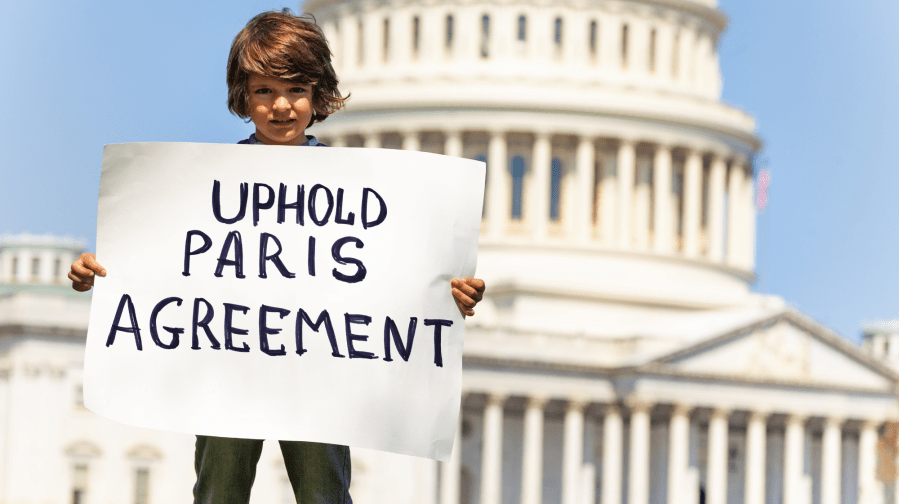
Nations of the world have been meeting every year for 30 years to address global warming. In 2015, the Paris Agreement was a major milestone by almost all countries to slow down the warming.

Institutions and governments at all levels have made a difference by investing in renewable energy to replace polluting fossil fuels, but it is not enough.

Each year since 2015 has been hotter than the year of the Paris Agreement; and since then, the U.S. has been hit by 193 disasters that cost at least $1billion for a total cost of $1.5 trillion. Adding human suffering to that, the impact is immeasurable.

Innovative research is happening everywhere to lower global warming pollutants and reduce loss of lives and livelihoods.

What we need is a political will to stay on the path and not dismantle what was started. Our leaders need to listen to us.

Austin American-Statesman

Kalpana Sutaria, Member, Austin Metro Chapter, Citizens’ Climate Lobby

Watching the CCL Virtual Conference

Sharper Than Ever: CCL’s Next Chapter | November 14 and 15, 2025

You can watch the fall conference on YouTube.

Our original post:

Please join Citizens’ Climate Lobby for the annual fall conference, which will be held online. Citizens’ Climate Lobby is pushing climate action forward! What to expect:

  • Equip yourself to be an effective climate advocate in the current political landscape.
  • Learn the policy details of permitting reform, a critical component of America’s clean energy future.
  • Reconnect with CCL’s values and unique culture, so you’re ready to carry our new strategy forward. Questions? Email: conference.inbox@citizensclimate.org.

Citizens’ Climate Lobby is a non-profit, nonpartisan, grassroots advocacy organization focused on national policies to address climate change. Our core values include:

  • We are focused on solving climate change. We move Congress to pass big solutions that will ensure a healthy climate. We also work on complementary solutions that help us work together in our communities and foster a more collaborative environment in Congress.
  • In the face of challenges, we choose optimism — that people are good, that democracy can work, that we can solve climate change, and that we are greater than our flaws. Optimism turns our concern about climate change into action, and it’s catching on — more and more people join us every day.
  • We empower everyone in exercising their personal and political power regardless of race, ethnicity, nationality, gender, sexual orientation, age, religion, ability, or political affiliation. We continue to bring awareness of important issues to all our volunteers and foster a sense of belonging to our organization.
  • Our approach is thoughtful and thorough. We are prepared — we consult experts, use data, and solicit feedback before forming opinions or making decisions. We follow up when we are asked. We keep on going even when it’s hard. People know that they can count on us to be consistent and to do what we say we will do.

If you haven’t already joined Citizens’ Climate Lobby and the secure online conversation platform, please do. It is free to join! Then you will have access to a wide variety of resources, you can join affinity groups based upon your interests, you can receive training (live or recorded), and more! The Austin chapter has a its own page on the website, and there you can discover local events held throughout the year, from happy hours to monthly meetings and official “lobby” days. We would love to have you join us!

For a preview of issues to be covered during virtual lobby meetings this fall, follow this link to the, “Lobby Meeting Toolkit.”

Flooding

Texas GOP won’t say it, but climate change is on special session agenda

The following was shared by the American-Statesman Editorial Board, Express-News Editorial Board on July 25, 2025. We wanted to share it with you and urge you to follow the link to see the maps and charts that illustrate the article.

“Climate change isn’t mentioned in Gov. Greg Abbott’s special session agenda, and yet it can be found throughout.

As Republican lawmakers consider responses to the July 4 flooding in the Hill Country that killed at least 135 people, they are unlikely to give voice to climate change, except perhaps with disdain or disbelief.

Yet when they discuss extreme weather, flooding infrastructure, alert systems, emergency communications, relief funding, and disaster preparedness and recovery, they will inherently be discussing climate change.

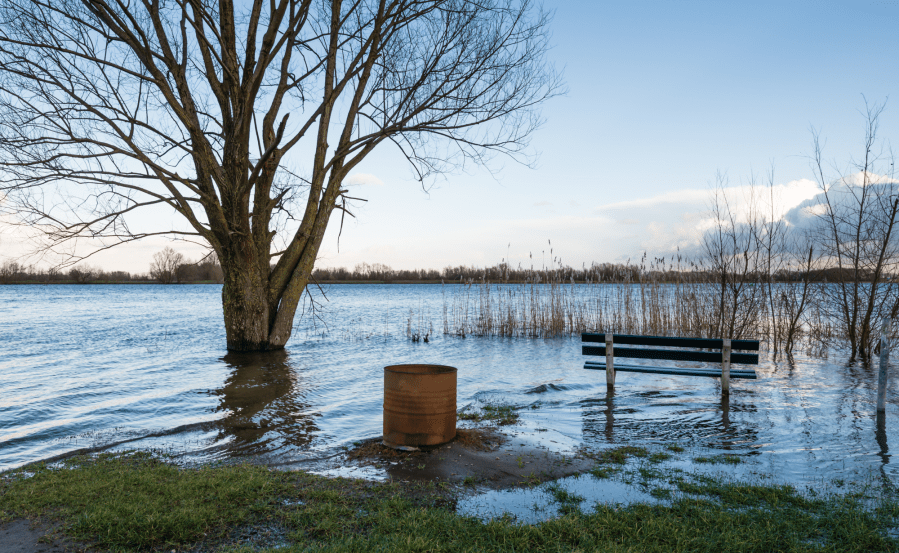
While climate change did not cause the Hill Country flooding this month, without a doubt it intensified the storm. Scientists are clear that warmer air leads to bigger rainstorms and higher chances of deadly flooding.

Take a region such as the Hill Country, whose unique geographic features have contributed to its nickname Flash Flood Alley, add warmer air, which holds more moisture, and you have a concoction to fuel thunderous storms that strike with deadly force.

To ignore scientific research on this point, to set aside climate models, is to fail to prepare for future storms, and then express shock and awe when they hit. Just as no public official should have expressed surprise — but many did — by the July 4 flooding given the known history of disaster along the Guadalupe River, no public official should express surprise about future dangerous flooding given the known modeling for climate change and extreme weather.

But this is Texas, where the oil and gas industry is supreme, and climate change denial is ingrained and pervasive.

Here is the central issue as the Texas Legislature deliberates: Republican lawmakers, so loath to utter the words “climate change,” nonetheless must enact policies and fund infrastructure that not only respond to the July 4 flooding but anticipate future disasters, whether or not they wish to name the danger.

If lawmakers fund an alert system but allow people to rebuild and develop in flood zones — to return to river life as it was — with little consideration for the confluence of climate change and extreme weather, they will deliver only the veneer of a meaningful response. They will be treating July 4 as an outlier, rather than a dire warning for a region with a history of deadly flooding that is also warming.

‘So damn dangerous’

The Texas Hill Country is especially vulnerable to extreme flooding due to the Balcones Escarpment. Running some 450 miles from Del Rio along the Rio Grande to the Dallas area, the Balcones Escarpment, which encompasses San Antonio and Austin, marks the end of the Great Plains and the beginning of the Edwards Plateau.

Its craggy and beautiful limestone hills can rise as high as 2,000 feet, sloping away from the fault line toward the Gulf of Mexico.

“Because this region falls loosely within the transition zone between the humid eastern section of the United States and the arid West, the climate can toggle between deluge and drought, an oscillation fueled in part by whether an El Niño or La Niña system prevails,” Char Miller, a professor of environmental analysis and history at Pomona College, wrote in his book “West Side Rising,” which focuses on the 200-year history of floods and flood control in San Antonio and Flash Flood Alley.

Warm, moist air from the Gulf of Mexico also fuels flooding as it moves north and deeper into Texas, rising and falling with hills until the sky explodes.

“This cycle is called convection,” Miller said in an interview. “The more you have convection — almost like a circle: up, down, up, down, up, down — you create the context over the Edwards Plateau for these thunderous storms.”

When intense rain falls in the Hill Country — as much as 15 inches of rain fell in Kerr County in mere hours — it hits limestone and the rivers begin to rush.

When that rainfall interrupts an extended drought — also amplified by climate change — the flooding is even worse. The hardened, sunbaked earth absorbs precious little water, sending most of the deluge downhill.

“Water can cut through limestone, as it has done (for millennia), which is why the Hill Country is so stunningly beautiful and those rivers are so damn dangerous,” Miller said. “Because it creates these narrow channels coming through the escarpment.”

This serves as a baseline for flooding conditions.

It may be tempting to look at the Hill Country’s geography, cite its extensive history of flooding and conclude that this is simply the tragic way things are. The region has always flooded and always will. But climate change is in addition to these environmental factors. Think, “Yes, and” not “No, but.”

“Climate change, by adding water to the atmosphere, it’s loading the dice in favor of getting these really heavy (rain) events,” said Andrew Dessler, an atmospheric sciences professor with Texas A&M University and director of the Texas Center for Extreme Weather. “This is actually one of the oldest predictions in climate science. It was made long before it was observed. Climate models were predicting this.”

This isn’t academic. An initial analysis by the research group ClimaMeter found meteorological conditions before the Hill Country flooding were warmer and 7% wetter than in the past.

Just as there is no shortage of after-action reports and news stories responding to past floods, there is no shortage of climate reports warning of more extreme rain.

The Fifth National Climate Assessment, published in 2023, warns: “Drought risk has been increasing in the Southwest over the past century, … while at the same time rainfall has become more extreme in recent decades.”

The 2024 update to the report, “Extreme weather in Texas, 1900-2036,” by state climatologist John Nielsen-Gammon, notes extreme rain in Texas is expected to increase by 20% in 2036, compared with 1950-1999.

Calling a storm a 100-year event means that in any year, there is a 1% chance that a storm of such intensity will occur.

“If extreme rainfall amounts increase by just 20%, the 100-year rainfall event threshold is exceeded twice as often,” the report says.

So, when public officials describe the July 4 storm as a once-in-a-lifetime event, that’s wishful thinking in a warming world.

“I think they need to rebuild with the idea that this is going to happen more frequently in the future, because we’re very sure it will happen more frequently in the future,” Dessler said. “And you know, obviously, that’s a problem when you live in a state where the governor literally won’t say the words “climate change.”

State of denial

While the catastrophe in the Texas Hill Country requires a unified response from local, state and federal leaders — the devastation stretches for miles — it occurred as all three layers of government are unified in their hostility and skepticism toward climate science.

The federal website that hosted the National Climate Assessment has gone dark. During the Texas Legislature’s recent regular session, state lawmakers championed legislation that would have hamstrung renewable energy, even though solar, wind and battery storage have proved crucial in maintaining Texas’ electric grid. And in Kerr County, climate skepticism abounds.

“Do I believe climate change was involved (in the July 4 storm)? Definitely,” former Kerrville Mayor Bill Blackburn, who served from 2018 through 2022, told us. “But that is very much a point of debate in this county. And it will continue to be.”

While we have no answers about how to break through with climate skeptics, the July 4 storm shows the devastating cost of denying climate reality. This brings us to the flood maps.

The Federal Emergency Management Agency’s flood maps are woefully out-of-date — Kerr County’s flood map was last updated in 2011 — and thousands of properties in Kerr County still fall in the flood zone. Beyond this, the firm First Street, which models climate data, has found that when heavy rainfall and climate risk are factored together, 4,592 properties in Kerr County are in a high-risk flood zone.

Yet the vast majority of properties in Kerr County and Texas lack flood insurance.

If the state is serious about protecting Texans from future floods, it must be serious about not only incentivizing flood insurance but also ensuring structures aren’t built in dangerous places. It’s horrifying that federal regulators removed buildings at Camp Mystic — where 27 children and counselors died, as well as the camp’s owner — from the 100-year flood map. That should never have happened. But it did.

The miles of destruction along the Guadalupe River provide a grim rebuttal to FEMA’s flood maps. For years, FEMA has been working to update those maps, using more current data from the National Oceanic and Atmospheric Administration showing the likelihood of heavier rain events.

But local governments don’t have to wait. They can draw on that rainfall data now to identify flood-prone areas where development must be limited for safety reasons.

Meanwhile, another way for the state and Kerr County to get people out of harm’s way is to buy high-risk properties in flood zones.

Again, we can turn to history for precedent. Over two decades, Austin bought and cleared more than 800 homes in the flood-prone Onion Creek area, using local dollars and FEMA aid — vital support from an agency that President Donald Trump has mused about dismantling.

The miles of destruction along the Guadalupe River provide a grim rebuttal to FEMA’s flood maps. For years, FEMA has been working to update those maps, using more current data from the National Oceanic and Atmospheric Administration showing the likelihood of heavier rain events.

But local governments don’t have to wait. They can draw on that rainfall data now to identify flood-prone areas where development must be limited for safety reasons.

Meanwhile, another way for the state and Kerr County to get people out of harm’s way is to buy high-risk properties in flood zones.

Again, we can turn to history for precedent. Over two decades, Austin bought and cleared more than 800 homes in the flood-prone Onion Creek area, using local dollars and FEMA aid — vital support from an agency that President Donald Trump has mused about dismantling.

And after deadly flooding in 1998 — 31 deaths across South-Central Texas — San Antonio Mayor Howard Peak directed the city to buy hundreds of properties in the floodplain.

“Had we continued to live there, we would have been flooded more than once since 1998,” said Denise Doyle, who praised the city for purchasing her home along Beitel Creek on San Antonio’s Northeast Side.

After the June 12 deadly waters that swept vehicles into Beitel Creek, we visited with Doyle at the site of her former home. Just from seeing the debris in trees, it was clear the recent flood would have overwhelmed her home. It was also clear the home’s demolition and subsequent flood control projects protected neighboring properties that are still standing.

“The 1998 flood, which was so devastating, actually produced one of the best policy decisions ever,” Miller, the expert on Flash Flood Alley, told us. “Which is, buy people out of the floodplain.”

Climate change is not on the agenda this special session, but it permeates every aspect of the July 4 storm discussion. When officials openly grieve the lives lost, or reflect on the properties washed away or the countless trees uprooted, they are giving voice to the consequences of extreme weather in a warming world. They may not say the words “climate change,” but it is inherent in every aspect of the discussion.

Should officials continue to deny this reality, they are choosing to invite future calamity. No one should be surprised when the next storm hits.”

This editorial is part of the collaboration between the Austin American-Statesman and San Antonio Express-News editorial boards in response to the Central Texas floods.

July 25, 2025
Fourth of July

Be Patriotic: Everyday Acts of Civil Engagement

The American Lung Association in “A Declaration on Climate Change and Health” observes that climate change is a health emergency, one “already harming health and causing loss of life. The window to prevent the worst impacts is rapidly closing.”

The organization points out several worrisome facts:

  • Climate change puts everyone’s health at risk, regardless of where you live.
  • Lots of people are at increased risk of getting sick or injured as a result of climate impacts, even if they don’t realize it. They include kids, seniors, people with chronic diseases like asthma or diabetes, people who are pregnant, people with disabilities, people who work outdoors, people with low-incomes, people of color and many more.
  • Extreme heat is killing people. It causes more deaths than any other weather-related hazard, and climate change is making it much worse. Heat is also linked with a wide array of short-term and long-term illnesses.
  • Wildfires are becoming more frequent and intense, spreading dangerous smoke that is making people sick. Particle pollution and other harmful substances in the smoke are linked to lung disease, lung cancer, heart disease, stroke, dementia, and preterm birth.
  • Climate change is making smog worse. Warmer temperatures increase smog (also called ozone pollution), which is linked to asthma attacks, lung disease, cardiovascular disease, preterm and low birthweight infants, cancer, harms to brain health and premature death.
  • Storms and flooding are getting more severe, causing injuries, worsening physical and mental health, and cutting people off from their healthcare.
  • Disease-carrying insects like ticks and mosquitoes are multiplying and spreading to new areas, increasing exposure to illnesses like Lyme disease and Dengue fever. Water- and food-borne pathogens are also spreading.
  • Allergy seasons are getting longer and more intense.
  • Rising carbon dioxide are projected to decrease the nutritional content of crops.

Citizens’ Climate Lobby is a nonpartisan nonprofit organization. CCL insists – and we agree – “The everyday acts of civil engagement that CCLers do around the country – calling, writing, or meeting with lawmakers; creating dialogue and building coalitions in our communities – will be incredibly powerful. With every climate action we take, we’re making the voice of the American people louder in a time when it’s far too easy for those voices to be drowned out.”

Further, “Because we believe in a government that listens to the people it represents. So, we intend to keep showing up to be heard. We hope you’re with us and ready to make your voice heard, too.”

Rex Huppke writes for USA Today, “This July Fourth, my patriotism looks like two middle fingers – and that’s OK | Opinion” (June 30, 2025).

What does our patriotism, in this rather pivotal moment in American history, look like? How do we celebrate America – the right-now version of America – when democracy looks as fragile as a cracked sheet of thin ice over a warming pond?

My America won’t tolerate racists or xenophobes or clout-chasing knuckleheads who think the American dream involves trampling carelessly over others while forgetting the very things that make this country great …. My America fights back against tyranny and indecency with ridicule, peaceful public protest, voting and a unified voice.

I’m not happy with the state of America …. But I’m not going to look at the American flag and feel ashamed. That flag still represents a country I believe to be well worth fighting for ….

Fourth of July
Happy Fourth of July!

If you are not receiving regular email from Citizens’ Climate Lobby, especially those alerting you to take simple yet meaningful actions about bills that harm human health, our shared natural resources, and the safety and well-being of our fellow Americans – sign up today! We need your voice now more than ever.

You might enjoy reading Flannery Winchester’s blog post with several additional helpful links, “These times call for us to hold the line on climate” (June 25, 2025).

Science

Science Underpins the Work of Citizens’ Climate Lobby

Citizens’ Climate Lobby bases its work and policy initiatives on scientific evidence. In fact, you can study and learn about the science behind climate change on the organization’s website in the section, “Climate Change Science.” Topics range from greenhouse gases to the role of carbon dioxide, ozone to the impact of human beings on the climate. Citizens’ Climate Lobby provides this information free of charge as a public service.

Another insightful training CCL provides is called, “Weather Attribution Science,” and it focuses on the background behind attribution science – the process of quantifying the contribution of global warming to extreme weather – and other events. The training includes a discussion about the process for connecting climate change with extreme weather events.

Extreme weather is a significant concern for citizens of the State of Texas. As Texas Tribune laments, “Texas weather extremes likely to become normal, scientists say” (2024). Alejandra Martinez and Yuriko Schumacher report, “Climate scientists and academics say that as emissions of heat-trapping greenhouse gases continue to push temperatures higher, severe weather in the state is likely to worsen. They add that Texas will likely see a growing gap between wet parts of the state and dry parts as climate change alters precipitation patterns and warms oceans.” You can also listen to the article by click on the link above.

More recently, on May 3, 2025 Guardian US shared, “Scientific societies to do climate assessment after Trump administration dismissed authors.”

Two major US scientific societies have announced they will join forces to produce peer-reviewed research on the climate crisis’s impact days after Donald Trump’s administration dismissed contributors to a key Congress-mandated report on climate crisis preparedness.

On Friday, the American Meteorological Society (AMS) and the American Geophysical Union (AGU) said that they will work together to produce over 29 peer-reviewed journals that will cover all aspects of climate change including observations, projections, impacts, risks and solutions.

The collaboration comes just days after Trump’s administration dismissed all contributors to the sixth National Climate Assessment, the US government’s flagship study on climate change. The dismissal of nearly 400 contributors had left the future of the study in question.

We are delighted to see the good work continue. Factual information, rather than gossip and misinformation, are the best way to make qualified, realistic and informed decisions when it comes to understanding and mitigating the effects of climate change, and to protecting the citizens of the State of Texas.

Megan Johnson wrote for Harvard T. H. Chan, “Stopping Misinformation: Scientists and Medical Professionals are Important Players in Communicating Reliable Information” (2025). She observes, “In a highly complex information ecosystem, news travels fast. Whether it’s dispersed through traditional news publications, social media, or fringe outlets, the news can get warped. That’s why communicators are trying to find the best ways to share their messaging accurately and promptly.”

It is great to see high level training being provided to the science community to help them deal with misinformation and to respond quickly. It would be great to see an educational program developed for the public as well. In the meantime, be sure to sign up on the Citizens’ Climate Lobby website for the fact- and science-based trainings discussed above.

Check out our Bluesky feed @cclatx!

One thing the Austin Chapter of CCL has learned since joining Bluesky during the final months of 2024, is that many scientists are active on the platform. You can find us at @cclatx.bluesky.social, and we do share scientific updates in addition to our own organizational information. If you are interested in science and the facts behind climate change, Bluesky is the place to be!

Once you join Bluesky, look under “Discover” and follow hashtags like #Science #Climate Science #Climate Politics #Climate Change Sciences #Climate Crisis #Climate & Sustainability #Climate Adaptation and more. You can also follow “Lists” like “Climate Science, Impacts and Solutions.” Katharine Hayhoe has several “starter packs” that help you quickly identify influential scientists to follow. Among them are, “US National Nature Assessment Authors,” “Climate Justice,” “Climate + Finance” (and more). Our experience on Bluesky has been terrific and we learn a lot every time we “log in.”

Science knows no country, because knowledge belongs to humanity, and is the torch which illuminates the world. Science is the highest personification of the nation because that nation will remain the first which carries the furthest the works of thought and intelligence.

Louis Pasteur, French scientist (1822-1895)

Texas State Capitol

Citizens’ Climate Lobby Texas Lobby Day 2025

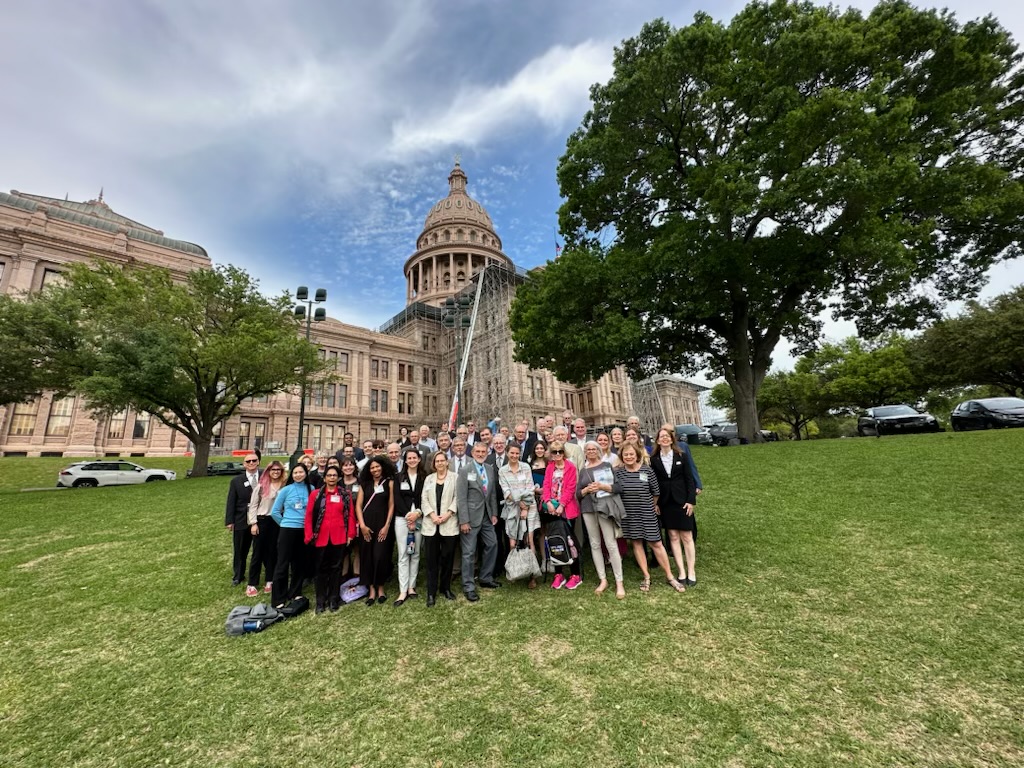
Did you know, in-person meetings are the most powerful way to build relationships with legislators and to influence Texas’ climate policy. CCL’s Texas Lobby Day not only offers you the chance to meet and share your concerns with elected officials of the State of Texas, but you will also have a chance to meet with and be inspired by your fellow climate advocates from across the state. Our last Lobby Day at the Texas State Capitol was a tremendous success. Please consider joining us in Austin for 2025!

What will happen?

First, you will be trained to understand the top priorities of Citizens’ Climate Lobby during an afternoon meeting held on Monday, March 31 at Sumners Hall, St. David’s Episcopal Church in downtown Austin. The training occurs from 1:30 to 4:30 p.m. You will be fully briefed by experts, so that your meetings with elected officials the following day are focused and productive.

Then, after breakfast on Tuesday, April 1 at Crail Hall, St. David’s Episcopal Church (a comfortable walking distance to the State Capitol), you will meet with State House and Senate representatives to advocate for strong, nonpartisan actions on climate. All meetings will have been re-arranged, so you know where to go, and to whom you will be speaking.

CCL Texas Lobby Day

Make your voice heard and urge lawmakers to make smart investments in the clean energy future of Texas. We will also ask our legislators to come to the table on climate solutions by joining the bipartisan Texas Energy & Climate Caucus.

We need you to be present! To review the full agenda and to register, follow this link to Eventbrite. We look forward to seeing you then. Thank you.

Austin, Texas USA

We are Ready to Meet this Moment

Citizens’ Climate Lobby is ready to meet this moment. Our long history of working respectfully across the aisle means we have earned a seat at the table with lawmakers in both parties. Even now, we are well positioned to make progress on evidence-based climate solutions. With the support of our dedicated staff and grassroots volunteers nationwide, we intend to do just that.

Rachel Kesteres, (former) Executive Director, Citizens’ Climate Lobby

We hope you had an enjoyable holiday and that you are having a Happy New Year! The words above from Rachel Kesteres address the results of the 2024 Presidential election. Further, “This moment in American politics will require a lot from climate advocates. It will require a vigorous, focused defense of what our movement has achieved so far. At the same time, it will require a willingness to find opportunities to achieve additional, meaningful progress.”

Are you ready?

You can prepare for what lies ahead. First of all, each month – traditionally on the second Saturday of each month at 12 noon Central Time – Citizens’ Climate Lobby supporters gather locally for a national monthly meeting to educate themselves by listening to a guest speaker. Go to your local chapter’s page to find out more about your chapter’s plans for listening in. To watch the livestream: cclusa.org/livestream. Following the meeting, local groups like the Austin Chapter gather in person or online to discuss timely local and national topics.

Our Chapter has more than 2,000 members, and we urge you to join us by heading over to the CCL website to find, “TX Austin.” Once you join the platform, which is free to all, you can sign up to receive notifications of upcoming activities including happy hour gatherings and training sessions. That way, you will be in the loop. The next national meeting (with the local meeting following):

In addition, check out the CCL YouTube channel. In 2024, Senator-elect John Curtis, a Republican from Utah, spoke to CCL and his speech is available on YouTube. Senator Curtis has been vocal about climate change during his time in the House of Representatives. In this video, he shares his perspective on what is possible for climate action in the new Congress and under the new administration.

Additional timely videos you might enjoy:

  • Carbon Pricing Opportunities in the 119th Congress – With the election behind us, we have a clearer picture of the opportunities and constraints the new Congress may present for implementing a carbon price. In this session, Dr. Danny Richter, CCL’s Policy Fellow, walks us through the lay of the land and how carbon pricing policy could evolve and tie in with tax policy reform. Watch now.
  • The Continuing Case for Permitting Reform – Rob Gramlich (President of Grid Strategies LLC) and Shane Londagin (Senior Policy Advisor for Innovation at Third Way), join CCL’s Research Coordinator Dana Nuccitelli to discuss the need for more permitting reform. Watch now.

We are delighted to announce a new book by longtime Austin Chapter member Kalpana Sutaria has been published, “Cooling our Environment: An Architect’s Vision to Combat Global Warming” by Atmosphere Press. Kalpana serves as our Chapter’s Media Team leader. You can read more by Kalpana on our Chapter website, Voices of Austin. She has been one of our most active writers of letters to the editor in the Austin American-Statesman! If a book signing event occurs this year, we will share that information with you on Voices of Austin.


The Austin Chapter would like to thank everyone who joined our new feed on Bluesky @cclatx.bsky.social. In only a few weeks, we have attracted more than 440 followers! We closed our former X/Twitter account, and we haven’t looked back. Please join us on Bluesky where we share organizational information as well as noteworthy articles from other sources. Our thanks go to longtime volunteer curator Carolyn M. Appleton.

Happy New Year!

KXAN Team

Local Advocates Honor KXAN First Warning Weather Team for Climate Coverage

The Austin Chapter of Citizens’ Climate Lobby, a national, nonpartisan, volunteer-led organization, has honored the KXAN First Warning Weather Team as Climate Coverage Champions. Meteorologist Jim Spencer, recently retired after 34 years at KXAN, was presented with his own plaque in recognition of his pioneering work in incorporating evidence of a warming planet into his newscasts. The other members of the First Warning Weather Team led by Chief Meteorologist Nick Bannin have continued and expanded on Spencer’s inclusion of climate messaging into weather forecasts when appropriate and relevant. An example is when they recently reported that 2024 was Austin’s hottest meteorological fall on record.

Other members of the First Warning Weather Team are Kristen Currie, Rich Segal, Freddy Vela, and Tommy House. All were present at the presentation of the Climate Coverage Champions award plaques. Citizens’ Climate Lobby volunteer Dale Bulla presented the awards.

Citizens’ Climate Lobby has long recognized that local TV meteorologists are uniquely positioned to help the public understand the connection between extreme weather and climate change. By crafting weathercasts to inform viewers about how today’s extreme weather events fit into historical climate trends, the KXAN team helps to educate about the facts of climate change.

Citizens’ Climate Lobby is a nonpartisan nonprofit organization with local chapters across the country. The organization advocates for legislation to support climate solutions. In addition to Dale Bulla, the Austin Chapter was represented by volunteers Cynthia Lesky, Pat Bulla, Susan Meredith and Matthew Weldon. To learn more about the work of CCL citizen lobbyists, and to sign up to volunteer, follow this link to the website.

CCLATX Logo
Check out our new Bluesky feed!

Electrify Your Home

Electrify Your Home: No Flames, No Fumes, No Fuss

This August, Citizens’ Climate Lobby is focused on one of its core issues: electrification.

But why should we electrify our homes?

  • With fossil fueled appliances in our home, the air we breathe inside is often dirtier than the air outside of them. Electrifying helps ensure your home is a safe haven, rather than a safety hazard.
  • Outdated, fossil fueled appliances use energy less efficiently, which drives up your energy usage – and your bills. When you electrify, your appliances will perform better and save you money in the long run.
  • Your wallet will thank you for electrifying your home. The incentives from the IRA: Inflation Reduction Act make it more affordable than ever. Don’t leave money on the table – take advantage of these incentives today!

CCL notes, “Fossil fuels are literally prehistoric. Bring your home into the modern age with electrification and reap the benefits of cleaner, safer energy.”

On a personal note, in the 1960s my Camp Fire troop in Southern California attended cooking classes at the local gas company. I have fond memories of those events, which were carefully orchestrated and enjoyable. Of course, we cooked on gas stoves. Today however, we know more about the health risks of gas appliances. Even the venerable chef Julia Child sang the praises of gas stoves. Vox notes in, “How the fossil-fuel lobby weaponized Julia Child’s gas stove” (November 2023):

Child had many stoves over her five-decade career, but she was famously devoted to one in particular: the Garland, a squat, six-burner gas range Child used in her home kitchen that cemented gas as her recommendation for professional and home chefs alike. The stove was so iconic that the Smithsonian has dedicated an exhibit to it.

KitchenAid shares a step-by-step guide to converting gas stoves to electric, should you be interested.

I notice that still today in Austin, there are apartment complexes being constructed with gas appliances. Some potential residents specifically look for complexes outfitted with gas appliances (see Every Austin Apartment with Gas Stoves by Everything Austin Apartments).

I am also a fan of historic home restoration and HGTV programs on that topic. The kitchens of historic homes are often outfitted with new versions of old gas stoves, so that they look just like the days when the homes were new. But is this safe?

Scientific American shares in, “The Health Risks of Gas Stoves Explained” (January 2023):

Gas stoves burn natural gas, which generates a number of invisible by-products. The biggest concern for human health is nitrogen dioxide (NO2). This gas is produced when natural gas is burned at high temperatures in the presence of nitrogen in the atmosphere, according to Josiah Kephart, an assistant professor in the department of environmental and occupational health at Drexel University. “We’ve known for a long time that [nitrogen dioxide] has many harmful effects on health,” he says.

Yet, some are still fighting to keep gas appliances in American homes. Vox notes:

In 2023, a mention doubting the safety of gas stoves made some politicians apoplectic. In January, the Consumer Product Safety Commission’s Richard Trumka Jr. set off a firestorm for raising the idea of a gas stove ban to which the Republican representative Ronny Jackson from Texas threatened “they can pry it from my cold dead hands.”

Maybe Hollywood – a key partner in the Julia Child and gas industry campaign back in the 1960s – can return to the topic of electrification, and encourage people to electrify their homes. Wouldn’t that be great!

Below you can download a helpful flier about electrifying your home courtesy of Citizen’s Climate Lobby. If you need more information, check out the CCL website and YouTube channel.

Carolyn M. Appleton, Citizens’ Climate Lobby volunteer (since 2017)