Sun Day Logo

Sun Day Austin | September 21, 2025

Bob Hendricks has been a volunteer for Citizens’ Climate Lobby for many years. He shares with us a call to participate in Sun Day in Austin, one of many sites across the nation participating in the annual event.

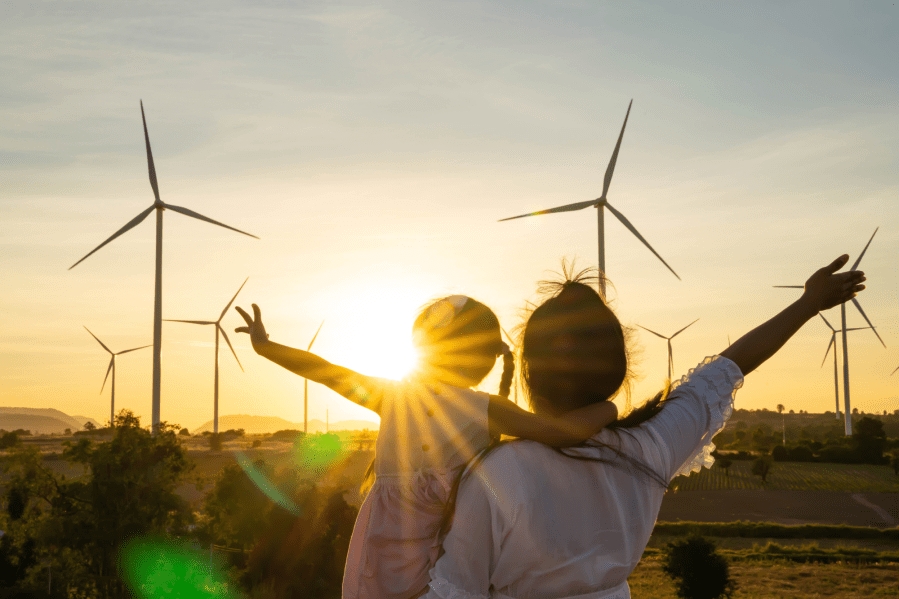
Sun Day is a day of action on September 21, 2025, celebrating the power of clean energy. The clean energy revolution is here. Solar, wind and batteries are the cheapest form of power on the planet, lowering costs, creating new jobs, and strengthening our communities. But some politicians and industries are trying to hold it back.”

Bob notes that on September 21 at the Texas State Capitol, “we will celebrate the progress we’ve made and push for more. We’ll install new solar, host e-bike parades, give heat pump tours, and rally for change. Together, we’ll make the sun rise on our clean energy future.”

Bob heartily believes in the goal of Citizens’ Climate Lobby “to create the political will for a livable world.” Further he asks, “we value our volunteers’ time and resources. We ask for action only when it is timely and significant. I am now asking you who care about the future of our kids and grandkids, about the future of all kids and grandkids, about the future of civilization, to come to and support our September 21 Sun Day Austin rally and tabling event at the Texas State Capitol grounds from 4:00 to 6:00 p.m. on Sunday September 21.”

“We celebrate that solar energy especially, along with wind energy and battery storage, provides cheaper energy than fossil fuels – and is getting still cheaper. This is huge. Our economy gravitates towards cheaper and better so the transition to clean energy is certain. And that same solar energy is clean and will wipe out a major source of pollution that causes severe asthma and other illnesses for millions of people. This is worth celebrating.”

We also are calling people to action. “We see the effects of overheating the planet already in unprecedented destruction – flooding, heat waves, freak storms, wildfires. And the science, which predicted all this, tells us it will get worse and worse as we continue to dump more and more carbon pollution into our sky.”

Sun Day 2025

Your attendance at Sun Day Austin or at any of hundreds of other Sun Day events, will send a message to policy makers that we, the people, know that solar energy is cheap and clean; that we know more solar will avoid even more increases in our electricity bills; and that more solar will greatly improve our health, especially for our more vulnerable, children, and seniors. It is a message that won’t change things immediately but will be an important step in the right direction.

We’re making Sun Day Austin a fun, inspiring and informative event. We’re hosting with our allies on September 21 at the Texas Capitol on the South Lawn. We will also have fun, children-focused events for the full time, so bring those kids and grandkids.

Please register, attend in person, and bring as many people as you can. We look forward to seeing you there.

Interested in volunteering? Email Bob Hendricks (bob.hendricks@citizensclimatelobby.org) or join the CCL secure conversation platform and message him securely there.


You might enjoy reading an opinion by Bob Hendricks that appeared in the Austin Chronicle in 2022, “Wake-Up Calls for Our Fossil Fuel Addiction.”

Environment Texas, “5 surprising facts about renewable energy growth in Texas” (October 2024).

Flooding

Texas GOP won’t say it, but climate change is on special session agenda

The following was shared by the American-Statesman Editorial Board, Express-News Editorial Board on July 25, 2025. We wanted to share it with you and urge you to follow the link to see the maps and charts that illustrate the article.

“Climate change isn’t mentioned in Gov. Greg Abbott’s special session agenda, and yet it can be found throughout.

As Republican lawmakers consider responses to the July 4 flooding in the Hill Country that killed at least 135 people, they are unlikely to give voice to climate change, except perhaps with disdain or disbelief.

Yet when they discuss extreme weather, flooding infrastructure, alert systems, emergency communications, relief funding, and disaster preparedness and recovery, they will inherently be discussing climate change.

While climate change did not cause the Hill Country flooding this month, without a doubt it intensified the storm. Scientists are clear that warmer air leads to bigger rainstorms and higher chances of deadly flooding.

Take a region such as the Hill Country, whose unique geographic features have contributed to its nickname Flash Flood Alley, add warmer air, which holds more moisture, and you have a concoction to fuel thunderous storms that strike with deadly force.

To ignore scientific research on this point, to set aside climate models, is to fail to prepare for future storms, and then express shock and awe when they hit. Just as no public official should have expressed surprise — but many did — by the July 4 flooding given the known history of disaster along the Guadalupe River, no public official should express surprise about future dangerous flooding given the known modeling for climate change and extreme weather.

But this is Texas, where the oil and gas industry is supreme, and climate change denial is ingrained and pervasive.

Here is the central issue as the Texas Legislature deliberates: Republican lawmakers, so loath to utter the words “climate change,” nonetheless must enact policies and fund infrastructure that not only respond to the July 4 flooding but anticipate future disasters, whether or not they wish to name the danger.

If lawmakers fund an alert system but allow people to rebuild and develop in flood zones — to return to river life as it was — with little consideration for the confluence of climate change and extreme weather, they will deliver only the veneer of a meaningful response. They will be treating July 4 as an outlier, rather than a dire warning for a region with a history of deadly flooding that is also warming.

‘So damn dangerous’

The Texas Hill Country is especially vulnerable to extreme flooding due to the Balcones Escarpment. Running some 450 miles from Del Rio along the Rio Grande to the Dallas area, the Balcones Escarpment, which encompasses San Antonio and Austin, marks the end of the Great Plains and the beginning of the Edwards Plateau.

Its craggy and beautiful limestone hills can rise as high as 2,000 feet, sloping away from the fault line toward the Gulf of Mexico.

“Because this region falls loosely within the transition zone between the humid eastern section of the United States and the arid West, the climate can toggle between deluge and drought, an oscillation fueled in part by whether an El Niño or La Niña system prevails,” Char Miller, a professor of environmental analysis and history at Pomona College, wrote in his book “West Side Rising,” which focuses on the 200-year history of floods and flood control in San Antonio and Flash Flood Alley.

Warm, moist air from the Gulf of Mexico also fuels flooding as it moves north and deeper into Texas, rising and falling with hills until the sky explodes.

“This cycle is called convection,” Miller said in an interview. “The more you have convection — almost like a circle: up, down, up, down, up, down — you create the context over the Edwards Plateau for these thunderous storms.”

When intense rain falls in the Hill Country — as much as 15 inches of rain fell in Kerr County in mere hours — it hits limestone and the rivers begin to rush.

When that rainfall interrupts an extended drought — also amplified by climate change — the flooding is even worse. The hardened, sunbaked earth absorbs precious little water, sending most of the deluge downhill.

“Water can cut through limestone, as it has done (for millennia), which is why the Hill Country is so stunningly beautiful and those rivers are so damn dangerous,” Miller said. “Because it creates these narrow channels coming through the escarpment.”

This serves as a baseline for flooding conditions.

It may be tempting to look at the Hill Country’s geography, cite its extensive history of flooding and conclude that this is simply the tragic way things are. The region has always flooded and always will. But climate change is in addition to these environmental factors. Think, “Yes, and” not “No, but.”

“Climate change, by adding water to the atmosphere, it’s loading the dice in favor of getting these really heavy (rain) events,” said Andrew Dessler, an atmospheric sciences professor with Texas A&M University and director of the Texas Center for Extreme Weather. “This is actually one of the oldest predictions in climate science. It was made long before it was observed. Climate models were predicting this.”

This isn’t academic. An initial analysis by the research group ClimaMeter found meteorological conditions before the Hill Country flooding were warmer and 7% wetter than in the past.

Just as there is no shortage of after-action reports and news stories responding to past floods, there is no shortage of climate reports warning of more extreme rain.

The Fifth National Climate Assessment, published in 2023, warns: “Drought risk has been increasing in the Southwest over the past century, … while at the same time rainfall has become more extreme in recent decades.”

The 2024 update to the report, “Extreme weather in Texas, 1900-2036,” by state climatologist John Nielsen-Gammon, notes extreme rain in Texas is expected to increase by 20% in 2036, compared with 1950-1999.

Calling a storm a 100-year event means that in any year, there is a 1% chance that a storm of such intensity will occur.

“If extreme rainfall amounts increase by just 20%, the 100-year rainfall event threshold is exceeded twice as often,” the report says.

So, when public officials describe the July 4 storm as a once-in-a-lifetime event, that’s wishful thinking in a warming world.

“I think they need to rebuild with the idea that this is going to happen more frequently in the future, because we’re very sure it will happen more frequently in the future,” Dessler said. “And you know, obviously, that’s a problem when you live in a state where the governor literally won’t say the words “climate change.”

State of denial

While the catastrophe in the Texas Hill Country requires a unified response from local, state and federal leaders — the devastation stretches for miles — it occurred as all three layers of government are unified in their hostility and skepticism toward climate science.

The federal website that hosted the National Climate Assessment has gone dark. During the Texas Legislature’s recent regular session, state lawmakers championed legislation that would have hamstrung renewable energy, even though solar, wind and battery storage have proved crucial in maintaining Texas’ electric grid. And in Kerr County, climate skepticism abounds.

“Do I believe climate change was involved (in the July 4 storm)? Definitely,” former Kerrville Mayor Bill Blackburn, who served from 2018 through 2022, told us. “But that is very much a point of debate in this county. And it will continue to be.”

While we have no answers about how to break through with climate skeptics, the July 4 storm shows the devastating cost of denying climate reality. This brings us to the flood maps.

The Federal Emergency Management Agency’s flood maps are woefully out-of-date — Kerr County’s flood map was last updated in 2011 — and thousands of properties in Kerr County still fall in the flood zone. Beyond this, the firm First Street, which models climate data, has found that when heavy rainfall and climate risk are factored together, 4,592 properties in Kerr County are in a high-risk flood zone.

Yet the vast majority of properties in Kerr County and Texas lack flood insurance.

If the state is serious about protecting Texans from future floods, it must be serious about not only incentivizing flood insurance but also ensuring structures aren’t built in dangerous places. It’s horrifying that federal regulators removed buildings at Camp Mystic — where 27 children and counselors died, as well as the camp’s owner — from the 100-year flood map. That should never have happened. But it did.

The miles of destruction along the Guadalupe River provide a grim rebuttal to FEMA’s flood maps. For years, FEMA has been working to update those maps, using more current data from the National Oceanic and Atmospheric Administration showing the likelihood of heavier rain events.

But local governments don’t have to wait. They can draw on that rainfall data now to identify flood-prone areas where development must be limited for safety reasons.

Meanwhile, another way for the state and Kerr County to get people out of harm’s way is to buy high-risk properties in flood zones.

Again, we can turn to history for precedent. Over two decades, Austin bought and cleared more than 800 homes in the flood-prone Onion Creek area, using local dollars and FEMA aid — vital support from an agency that President Donald Trump has mused about dismantling.

The miles of destruction along the Guadalupe River provide a grim rebuttal to FEMA’s flood maps. For years, FEMA has been working to update those maps, using more current data from the National Oceanic and Atmospheric Administration showing the likelihood of heavier rain events.

But local governments don’t have to wait. They can draw on that rainfall data now to identify flood-prone areas where development must be limited for safety reasons.

Meanwhile, another way for the state and Kerr County to get people out of harm’s way is to buy high-risk properties in flood zones.

Again, we can turn to history for precedent. Over two decades, Austin bought and cleared more than 800 homes in the flood-prone Onion Creek area, using local dollars and FEMA aid — vital support from an agency that President Donald Trump has mused about dismantling.

And after deadly flooding in 1998 — 31 deaths across South-Central Texas — San Antonio Mayor Howard Peak directed the city to buy hundreds of properties in the floodplain.

“Had we continued to live there, we would have been flooded more than once since 1998,” said Denise Doyle, who praised the city for purchasing her home along Beitel Creek on San Antonio’s Northeast Side.

After the June 12 deadly waters that swept vehicles into Beitel Creek, we visited with Doyle at the site of her former home. Just from seeing the debris in trees, it was clear the recent flood would have overwhelmed her home. It was also clear the home’s demolition and subsequent flood control projects protected neighboring properties that are still standing.

“The 1998 flood, which was so devastating, actually produced one of the best policy decisions ever,” Miller, the expert on Flash Flood Alley, told us. “Which is, buy people out of the floodplain.”

Climate change is not on the agenda this special session, but it permeates every aspect of the July 4 storm discussion. When officials openly grieve the lives lost, or reflect on the properties washed away or the countless trees uprooted, they are giving voice to the consequences of extreme weather in a warming world. They may not say the words “climate change,” but it is inherent in every aspect of the discussion.

Should officials continue to deny this reality, they are choosing to invite future calamity. No one should be surprised when the next storm hits.”

This editorial is part of the collaboration between the Austin American-Statesman and San Antonio Express-News editorial boards in response to the Central Texas floods.

July 25, 2025
Omni Shoreham D.C.

CCL Summer Conference & Lobby Day in Washington, D.C.

This year’s summer conference July 20 to 22 will not be livestreamed. Follow the event on social media!

Did you know, in-person meetings with elected officials are highly effective. All In Together notes that meeting with your elected officials offers several advantages:

  • Build Relationships: In-person meetings help build credible, long-lasting relationships with legislators and their staff.
  • Memorable Advocacy: Face-to-face interactions allow you to convey your message in a more nuanced and memorable way.
  • Deepened Engagement: You can invite others to join the cause, building broader community support.

Consider a combination summer vacation to Washington, D.C. where you can: 1) participate July 20 to 22 in our CCL conference, gain deep insights into current climate issues, and support our work in a genuinely impactful way; and 2) relax and enjoy the many interesting and enjoyable sites in Washington, D.C.

As noted on the conference website, you can expect:

  • A jam-packed event dedicated to building the skills you need for Lobby Day.
  • Insight into today’s climate landscape and key perspectives on where CCL fits in.
  • To be with the best people in the world, doing the best work, for the best cause.

The conference will be held at the historic Omni Shoreham Hotel. “The Shoreham hosted every presidential inaugural ball of the 20th century since President Franklin Delano Roosevelt, and the Shoreham has also played host to a number of famous entertainers in the legendary Blue Room throughout its 90-year history.” The hotel is listed on the Historic Hotels of America website, as designated by the National Trust for Historic Preservation.

To reach the main hotel website and find a room to your liking, follow this link. Tripadvisor lists quite a few noteworthy places to visit near the Omni Shoreham, too!

Learn more about the history of the Omni Shoreham by clicking on the postcard.

CCL Conservative Conference

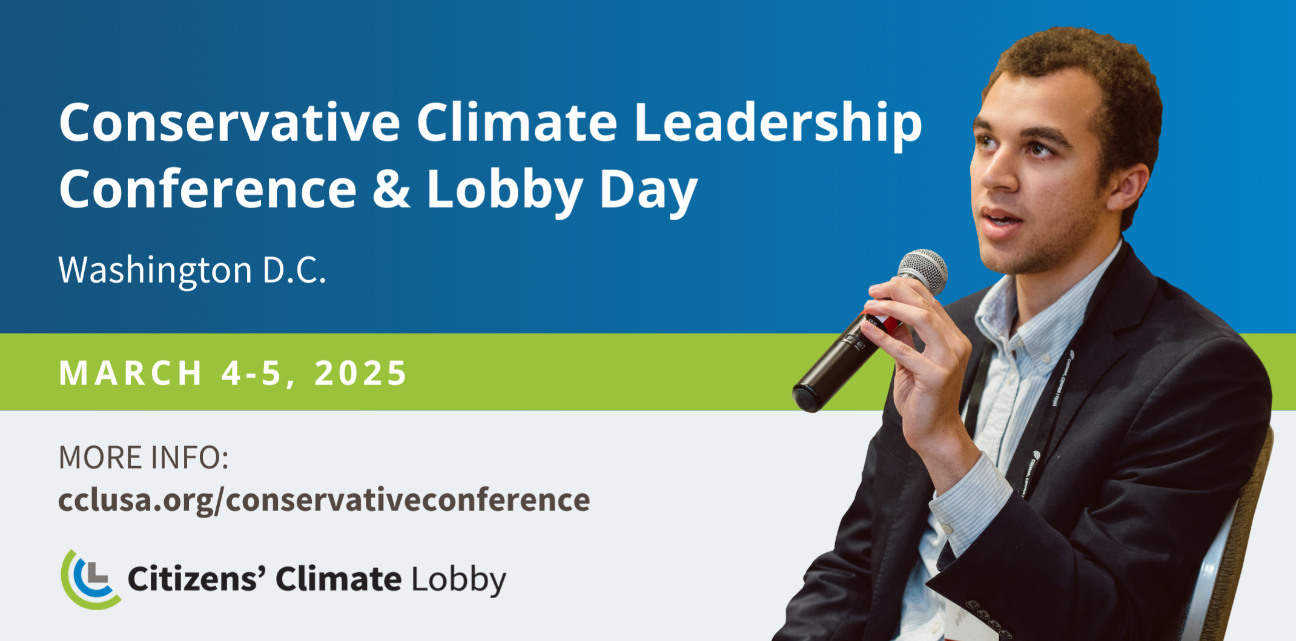
Conservative Conference in Washington, D.C. and Preserving Clean Energy Tax Credits

Follow Up

Now that the conference is over, you might enjoy this panel discussion featuring CCL Congressional Liaison Manager Mindy Ahler, Action Team Director Drew Eyerly, and Vice President of Government Affairs Jenn Tyler. Mindy, Drew, and Jenn review the outcome of our annual Conservative Climate Leadership Conference and Lobby Day and answered questions about lobby meetings, asks, and the importance of sending right-of-center volunteers to meet with Republicans.

Original Post

Next week is the Citizens’ Climate Lobby Conservative Conference and Lobby Day in Washington, D.C. Right-of-center CCL volunteers will meet with Republican offices. Their primary request in the lobby day meetings will be to preserve the clean energy tax credits of the Inflation Reduction Act. And we will probably be defending the IRA’s clean energy tax credits for a while! Budget reconciliation takes a long time as all the spending and cuts get hammered out. This is an essential start to the process.

The resolution the United States House of Representatives just passed as we post this article, directs all the committees in the House to either spend or cut certain amounts from their budgets for the next 10 years. Remember, the budget reconciliation process is a partisan one and Republicans are in charge of it this time. So, it is strategically helpful that Republican offices will hear first from fellow conservatives on this issue.

CCL’s national office notes,

“Some energy provisions and regulations that relate to the clean energy tax credits would fall under the jurisdiction of the Energy & Commerce Committee, which as noted earlier, has to cut $880 billion. But tax credits themselves are in the jurisdiction of the Ways and Means Committee. That committee can spend an additional $4.5 trillion, but that amount is intended to extend the 2017 Tax Cuts and Jobs Act. So, when it comes to the clean energy tax credits, we’re likely to see a collaborative discussion across these key committees.”

CCL Conservatives

If you haven’t already joined Citizens’ Climate Lobby via its secure community platform, do so today! It is free to all, and once you sign up – including joining our “TX Austin” chapter – you will receive information direct to your inbox. Although registration for our Conservative Climate Change Leadership Conference and Lobby Day is now closed, you will definitely want to be following the proceedings and checking YouTube for any recordings that are posted there.

Follow-up actions for all volunteers including those in our TX Austin chapter will be shared by the staff of Citizens’ Climate Lobby as well. We need your help now more than ever!

Texas State Capitol

Citizens’ Climate Lobby Texas Lobby Day 2025

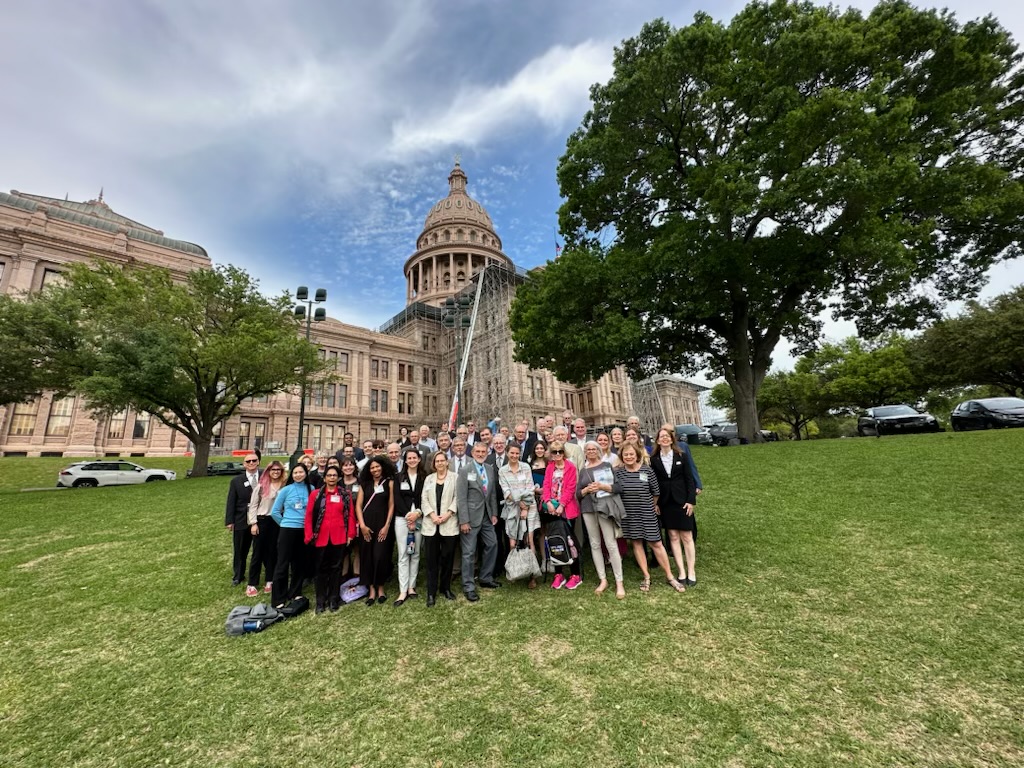
Did you know, in-person meetings are the most powerful way to build relationships with legislators and to influence Texas’ climate policy. CCL’s Texas Lobby Day not only offers you the chance to meet and share your concerns with elected officials of the State of Texas, but you will also have a chance to meet with and be inspired by your fellow climate advocates from across the state. Our last Lobby Day at the Texas State Capitol was a tremendous success. Please consider joining us in Austin for 2025!

What will happen?

First, you will be trained to understand the top priorities of Citizens’ Climate Lobby during an afternoon meeting held on Monday, March 31 at Sumners Hall, St. David’s Episcopal Church in downtown Austin. The training occurs from 1:30 to 4:30 p.m. You will be fully briefed by experts, so that your meetings with elected officials the following day are focused and productive.

Then, after breakfast on Tuesday, April 1 at Crail Hall, St. David’s Episcopal Church (a comfortable walking distance to the State Capitol), you will meet with State House and Senate representatives to advocate for strong, nonpartisan actions on climate. All meetings will have been re-arranged, so you know where to go, and to whom you will be speaking.

CCL Texas Lobby Day

Make your voice heard and urge lawmakers to make smart investments in the clean energy future of Texas. We will also ask our legislators to come to the table on climate solutions by joining the bipartisan Texas Energy & Climate Caucus.

We need you to be present! To review the full agenda and to register, follow this link to Eventbrite. We look forward to seeing you then. Thank you.

Email Congress!

CCL Action Items and Upcoming Events

The fall has arrived and Citizens’ Climate Lobby could use your help.

As you may have read, this summer, Sen. Joe Manchin (I-WV) and Sen. John Barrasso (R-WY) introduced the Energy Permitting Reform Act of 2024 (S.4753). “Expert analysis from the most trusted climate and energy modelers finds this legislation could reduce America’s climate pollution up to 25% by 2050. That means Congress could notch a huge climate win by passing this bill!”

The bill has recently passed the Senate Energy and Natural Resources Committee, so it has momentum. Now, it’s time for us to help push this bill across the finish line. We believe there’s a real opportunity for this to pass before the end of this Congress — but there are only a few months left to make it happen. Follow this link to email Congress! Thank you for taking the time.

In addition, the Higher Education and National Youth Action Teams of Citizens’ Climate are teaming up for a youth-driven campaign to get out the climate vote in 2024. The Climate GOAT Campaign is our way of channeling our superpower as authentic champions of the need for climate action to mobilize climate voters.

If you’re ready to use your voice to help the people you care about prioritize climate when they vote this year, sign up right now to join us on the Empower app. Follow the link!

Last but not least, please join us at these upcoming events:

Very best wishes!

CCLATX Logo
Permitting Reform

Action Item: Ask Congress to Enact Further Permitting Reform

The summer 2024 Citizens’ Climate Lobby conference in Washington, D.C. was a great success. As part of that event, 442 information-packed meetings were held with elected officials.

Following up on those meetings, we need your help. Follow the link to email your elected officials to urge them boost transmission projects, improve early community involvement, and to speed up the pace with which the U.S. builds and deploys new clean energy projects.

This is a simple task but exceedingly important. For without permitting reform, roughly half of the potential carbon pollution reductions from the Inflation Reduction Act will be lost.

Just like you need a building permit to expand your home, big energy projects must get written approval from local, state, and/or federal authorities to start construction. There are three key parts to successful energy permitting reform:

    Right now, it takes an average of 4.5 years for federal agencies just to complete environmental impact statements for major energy projects. These are important assessments, but we need them to move faster and speed up the pace with which we build new clean energy projects. Congress took the first steps to address this in the June 2023 debt ceiling bill.

      Thanks to tax credits passed in the Inflation Reduction Act, development of new solar and wind energy projects will grow exponentially. But building them is only part of the challenge – they also need to be connected to the grid to move power to the houses and businesses that need them. Ultimately, we need to triple our current capacity to transmit clean electricity by 2050.

        Better permitting allows local communities to give their input on energy projects early in the process and choose good projects over bad ones. Good projects should be approved faster, harmful projects should be rejected faster, and all new projects should safeguard the lives and health of people living nearby.

        Thank you for taking the time to email your elected representatives!

        Writing Postcards Helps Get Out the Vote

        Texas Postcard Project: Join Us!

        Citizens’ Climate Lobby “Third Coast” and its constituents across Texas hope to write 40,000 postcards to get out the vote. We have 40,000 names and addresses of registered voters who care about climate change, but who don’t often vote. And we need your help.

        There will be two online trainings to share why postcards matter, and how you can help specifically. Follow the link(s) to register on Eventbrite. Each session should last approximately 45 minutes:

        You can also simply sign-up to write postcards on our Google form. Financial donations to help offset the cost of postcard stamps would also be greatly appreciated. Donations are tax deductible. In-kind stamp donations are also welcome.

        Writing postcards and mailing them to our fellow registered voters accomplishes several key goals of Citizens’ Climate Lobby.

        • Influence Climate Legislation: Our work to pass key climate legislation is easier when more elected officials are climate advocates.
        • Impact of Get Out the Vote Programs: Many elections hinge on voter turnout. GOTV programs are critical to winning elections.
        • Focus on Unlikely Voters: We target registered voters who care about climate action but are classified as unlikely voters, unlike typical campaign efforts that focus on likely voters.
        • Targeted Voter List: We have a list of Texans in competitive state or federal districts where Get Out the Vote can make a significant impact due to gerrymandering.
        • Importance of Local and State Elections: These elections matter. GOTV can make a difference in local and state elections. Postcards are a commonsense way to share your concerns and those of Citizens’ Climate Lobby.
        • Effective and Low-Cost: Research shows that hand-written postcards with the right message are one of the most effective and affordable ways to influence voters. We provide brief training and clear instructions.

        Sign up online and let us know how you would like to help!

        Vote!
        Washington, D.C.

        Watch CCL’s Summer Conference Online

        Join 1,000+ people from across the country – including some of our own volunteers from Austin – to tell Congress that later is too late to stop the pollution overheating the planet.

        Although registration for the in-person conference is now closed, you can watch most of the conference online by registering on Zoom, or by watching the CCL YouTube channel.

        June 8-11, 2024

        Conference speakers and sessions cover a broad range of topics. Among them are:

        • Near-term opportunities for climate policy in Congress.
        • Bridging partisan divides that keep us from acknowledging the scope of the problem.
        • Making climate change a top priority in every 2024 election.

        Citizens’ Climate Lobby (CCL) is a nonprofit, nonpartisan, grassroots advocacy climate change organization focused on national policies to address the national and global climate crisis.

        Our consistently respectful, nonpartisan approach to climate education is designed to create a broad, sustainable foundation to drive climate action across all geographic regions and political inclinations. By building upon shared values rather than partisan divides, and empowering our supporters to work in keeping with the concerns of their local communities, we work towards the adoption of fair, effective, and sustainable climate change solutions.

        You can join the Austin chapter by following this link. There are also other regional teams you might like to consider. If you sign up to join CCL (which is free of charge), then you can complete your profile and you will receive important notifications direct to your inbox.

        Texas and Regional Chapters

        Thank you for your interest in our work. We hope you will share our website and posts with family and friends. And if you have questions – including members of the media – please use the secure contact form provided on this website.

        Washington, D.C.
        Thanks to Adobe for this beautiful photograph of Washington, D.C.

        Actions Teams

        CCL Action Teams: A Place for Everyone

        Action Teams are organized around specific interests and affiliations. Each team hosts its own meetings and most are national if not international in membership. Action Teams work to create the political will for a livable world. By creating Action Teams, Citizens’ Climate Lobby demonstrates its commitment to diversity and inclusion.

        Consider joining an Action Team! For example, here are a few of many options.

        In order to join an Action Team, you need to become a CCL member. That is free and you can learn more by signing up on the national office secure communication platform.

        In addition, we wanted to share a recent webinar that shares a wide range of timely information. About the speakers:

        “Karina Ramirez and Drew Eyerly present, ‘Understanding What You Don’t Understand,’ which outlines the importance of working together while embracing differences. Andrew (Drew) Eyerly serves as CCL’s Conservative Outreach Director, where he lends a conservative voice and perspective to the organization’s mission while working to recruit, engage, and retain right-of-center volunteers. Prior to joining CCL, Drew served in the United States Army for 12 years as a Preventive Medicine Specialist and as a Medic completing tours in both Iraq and Afghanistan. Karina Ramirez (She/Her/Ella) joined CCL as a volunteer in 2017 and has served as CCL’s Diversity & Inclusion Director since 2018. In this role, she supports volunteers and staff working toward inclusion and belonging efforts. Karina is originally from Ecuador and lives in West Palm Beach, Florida.”