
CCL Conservative Conference

Conservative Conference in Washington, D.C. and Preserving Clean Energy Tax Credits

Follow Up

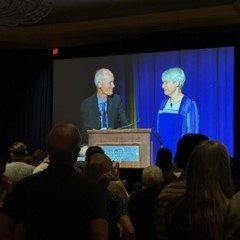
Now that the conference is over, you might enjoy this panel discussion featuring CCL Congressional Liaison Manager Mindy Ahler, Action Team Director Drew Eyerly, and Vice President of Government Affairs Jenn Tyler. Mindy, Drew, and Jenn review the outcome of our annual Conservative Climate Leadership Conference and Lobby Day and answered questions about lobby meetings, asks, and the importance of sending right-of-center volunteers to meet with Republicans.

Original Post

Next week is the Citizens’ Climate Lobby Conservative Conference and Lobby Day in Washington, D.C. Right-of-center CCL volunteers will meet with Republican offices. Their primary request in the lobby day meetings will be to preserve the clean energy tax credits of the Inflation Reduction Act. And we will probably be defending the IRA’s clean energy tax credits for a while! Budget reconciliation takes a long time as all the spending and cuts get hammered out. This is an essential start to the process.
The resolution the United States House of Representatives just passed as we post this article, directs all the committees in the House to either spend or cut certain amounts from their budgets for the next 10 years. Remember, the budget reconciliation process is a partisan one and Republicans are in charge of it this time. So, it is strategically helpful that Republican offices will hear first from fellow conservatives on this issue.

CCL’s national office notes,

“Some energy provisions and regulations that relate to the clean energy tax credits would fall under the jurisdiction of the Energy & Commerce Committee, which as noted earlier, has to cut $880 billion. But tax credits themselves are in the jurisdiction of the Ways and Means Committee. That committee can spend an additional $4.5 trillion, but that amount is intended to extend the 2017 Tax Cuts and Jobs Act. So, when it comes to the clean energy tax credits, we’re likely to see a collaborative discussion across these key committees.”
CCL Conservatives

If you haven’t already joined Citizens’ Climate Lobby via its secure community platform, do so today! It is free to all, and once you sign up – including joining our “TX Austin” chapter – you will receive information direct to your inbox. Although registration for our Conservative Climate Change Leadership Conference and Lobby Day is now closed, you will definitely want to be following the proceedings and checking YouTube for any recordings that are posted there.

Follow-up actions for all volunteers including those in our TX Austin chapter will be shared by the staff of Citizens’ Climate Lobby as well. We need your help now more than ever!

Clean energy

Keep Texas a Leader in Clean Energy Investments

In response to the August 18 op-ed, “By embracing free-market policies, Texas can be the leader in energy.”

Texas is already a leader in oil, gas and renewable energy production. It is the biggest emitter of greenhouse gas emissions in the U.S. Increased methane emissions from new natural gas power plants without adhering environmental measures will impact health and productivity of Texas workers.

The Inflation Reduction Act (IRA) provides investment incentives which would spur clean energy growth and reduce polluting emissions. According to E2, 334 major clean energy and clean vehicle projects were announced in the first two years of the IRA with $126 billion in investments and 109,000 jobs. Red states and GOP congressional districts are benefitting the most and Texas is one of top five states. The IRA also has incentives for agriculture, carbon dioxide removal and new technologies.

We want Texas to remain a leader in clean energy investments which are environmentally responsible to support growth, reduce polluting emissions and improve quality of life.

Kalpana Sutaria, Project Manager, City of Austin and Member, Austin Metro Chapter, Citizens’ Climate Lobby

Published by the Austin American-Statesman 

August 25, 2024

Electrify Your Home

Electrify Your Home: No Flames, No Fumes, No Fuss

This August, Citizens’ Climate Lobby is focused on one of its core issues: electrification.

But why should we electrify our homes?

  • With fossil fueled appliances in our home, the air we breathe inside is often dirtier than the air outside of them. Electrifying helps ensure your home is a safe haven, rather than a safety hazard.
  • Outdated, fossil fueled appliances use energy less efficiently, which drives up your energy usage – and your bills. When you electrify, your appliances will perform better and save you money in the long run.
  • Your wallet will thank you for electrifying your home. The incentives from the IRA: Inflation Reduction Act make it more affordable than ever. Don’t leave money on the table – take advantage of these incentives today!

CCL notes, “Fossil fuels are literally prehistoric. Bring your home into the modern age with electrification and reap the benefits of cleaner, safer energy.”

On a personal note, in the 1960s my Camp Fire troop in Southern California attended cooking classes at the local gas company. I have fond memories of those events, which were carefully orchestrated and enjoyable. Of course, we cooked on gas stoves. Today however, we know more about the health risks of gas appliances. Even the venerable chef Julia Child sang the praises of gas stoves. Vox notes in, “How the fossil-fuel lobby weaponized Julia Child’s gas stove” (November 2023):

Child had many stoves over her five-decade career, but she was famously devoted to one in particular: the Garland, a squat, six-burner gas range Child used in her home kitchen that cemented gas as her recommendation for professional and home chefs alike. The stove was so iconic that the Smithsonian has dedicated an exhibit to it.

KitchenAid shares a step-by-step guide to converting gas stoves to electric, should you be interested.

I notice that still today in Austin, there are apartment complexes being constructed with gas appliances. Some potential residents specifically look for complexes outfitted with gas appliances (see Every Austin Apartment with Gas Stoves by Everything Austin Apartments).

I am also a fan of historic home restoration and HGTV programs on that topic. The kitchens of historic homes are often outfitted with new versions of old gas stoves, so that they look just like the days when the homes were new. But is this safe?

Scientific American shares in, “The Health Risks of Gas Stoves Explained” (January 2023):

Gas stoves burn natural gas, which generates a number of invisible by-products. The biggest concern for human health is nitrogen dioxide (NO2). This gas is produced when natural gas is burned at high temperatures in the presence of nitrogen in the atmosphere, according to Josiah Kephart, an assistant professor in the department of environmental and occupational health at Drexel University. “We’ve known for a long time that [nitrogen dioxide] has many harmful effects on health,” he says.

Yet, some are still fighting to keep gas appliances in American homes. Vox notes:

In 2023, a mention doubting the safety of gas stoves made some politicians apoplectic. In January, the Consumer Product Safety Commission’s Richard Trumka Jr. set off a firestorm for raising the idea of a gas stove ban to which the Republican representative Ronny Jackson from Texas threatened “they can pry it from my cold dead hands.”

Maybe Hollywood – a key partner in the Julia Child and gas industry campaign back in the 1960s – can return to the topic of electrification, and encourage people to electrify their homes. Wouldn’t that be great!

Below you can download a helpful flier about electrifying your home courtesy of Citizen’s Climate Lobby. If you need more information, check out the CCL website and YouTube channel.

Carolyn M. Appleton, Citizens’ Climate Lobby volunteer (since 2017)

Permitting Reform

Action Item: Ask Congress to Enact Further Permitting Reform

The summer 2024 Citizens’ Climate Lobby conference in Washington, D.C. was a great success. As part of that event, 442 information-packed meetings were held with elected officials.

Following up on those meetings, we need your help. Follow the link to email your elected officials to urge them boost transmission projects, improve early community involvement, and to speed up the pace with which the U.S. builds and deploys new clean energy projects.

This is a simple task but exceedingly important. For without permitting reform, roughly half of the potential carbon pollution reductions from the Inflation Reduction Act will be lost.

Just like you need a building permit to expand your home, big energy projects must get written approval from local, state, and/or federal authorities to start construction. There are three key parts to successful energy permitting reform:

    Right now, it takes an average of 4.5 years for federal agencies just to complete environmental impact statements for major energy projects. These are important assessments, but we need them to move faster and speed up the pace with which we build new clean energy projects. Congress took the first steps to address this in the June 2023 debt ceiling bill.

      Thanks to tax credits passed in the Inflation Reduction Act, development of new solar and wind energy projects will grow exponentially. But building them is only part of the challenge – they also need to be connected to the grid to move power to the houses and businesses that need them. Ultimately, we need to triple our current capacity to transmit clean electricity by 2050.

        Better permitting allows local communities to give their input on energy projects early in the process and choose good projects over bad ones. Good projects should be approved faster, harmful projects should be rejected faster, and all new projects should safeguard the lives and health of people living nearby.

        Thank you for taking the time to email your elected representatives!

        What do Texans Want on Earth Day 2024?

        The year 2023 was the hottest year since 1850 exceeding the previous record set by 2016 per the Berkley Earth. Austinites experienced the record-breaking temperatures last summer with meteorologists raising alarms for outdoor workers. The state climatologist Dr. John Neilson-Gammon has assessment report of extreme weather in Texas as it continues to worsen.

        The State of Texas is a leader in oil and gas production, and it leads the nation in wind power generation, and it is almost at the top in generation of solar power. It is also the largest emitter of greenhouse gases in our nation. Without Texas, our nation cannot decarbonize itself. If Texas were a country, it would be the eighth largest economy and the eighth largest emitter of greenhouse gas emissions in the world. Texas’ actions to curb emissions would hugely improve the environment.

        With these facts, the Citizens’ Climate Lobby’s (CCL) leadership approached the Texas State Legislature in its 2023 session. Legislative sessions are held once every two years for 140 days. It is difficult for constituents to bring up issues to state lawmakers, when work of all committees and two state houses must be sorted through the number of bills filed, in a very short time. Important issues remain unaddressed.

        Policy decisions made by Texas Legislature affect the energy industry as well as Texans. How we generate and transport energy has a profound impact on our environment. The major ask of 10,000 volunteers of CCL was to improve the electric grid that transmits electricity from power plants to consumers. The problem was that transmission lines were not adequate to transmit all renewable energy that was generated, creating a backlog. CCL volunteers held 66 meetings with the state representatives of both parties. A year later, the backlog still exists, and transmission lines are not fully fixed. Generated energy’s backlog, and transmission bottlenecks such as these cost Texans over $5 billion in 2022 and 2023. Consumers, the State, and the environment – all of them will benefit if lawmakers enact the right policies.

        Methane leaks from oil and gas production in Texas hugely affect the environment because methane is a potent greenhouse gas that is 80 times more warming than carbon dioxide (CO 2 ). It stays in the air for decades rather than for centuries like CO2 does. Methane leaks and gas flaring are known to the authorities and oil and gas producers. Texas regulators have not enforced them fully. The new climate regulation by the Environmental Protection Agency (EPA) will require the oil and gas operators to reduce methane leaks. Per EPA, these rules can prevent equivalent of 1.5 billion tons of CO2 being emitted between 2024 and 2038, almost equal to emissions by all power plants in the country in 2021. Fixing methane leaks helps the operators too, but still Texas has challenged the rules.

        CCL supports climate solutions that grow economic opportunities, that are market based, cost effective, efficient and are implemented in a socially equitable manner. The climate crisis has highlighted the already existing inequities. It is worse for those who have fewer resources to live through any type of climate disasters – like flooding, drought, wildfires, sea level rise, extreme heat or cold – causing physical and psychological stress on people.

        We must not forget that global warming continues to accelerate. The Inflation Reduction Act (IRA) is delivering positive outcomes to combat the climate crisis. The State of Texas can take advantage of many available opportunities for emissions reductions in the IRA helping Texans. It has tax benefits for removal of accumulated carbon in the atmosphere for businesses.

        On this Earth Day, we want lawmakers to implement all policies to lower emissions and improve health and well-being of Texans.

        Kalpana Sutaria

        Project Manager, City of Austin and Member, Austin Metro Chapter, Citizens’ Climate Lobby

        Submitted to the Austin American-Statesman

        April 2024

        1. Rohde, Robert (2024), Global Temperature Report for 2023.
        2. Texas Economic Development Corporation, “Texas Economic Strength.”
        3. Environment Texas, “The Top Ten Biggest Global Warming Polluters in Texas.”
        4. Grid Monitor, The Texas grid did its job during the freeze, but the job’s not done.
        5. IEA, Methane and Climate Change.
        6. Federal Register, EPA Methane regulations issued on March 8, 2024.

        Protect America’s $20 Billion Investment in Agroforestry

        It only takes a “click” to email your elected representatives.

        Please join us in telling your member of Congress to secure our $20 billion investment in agroforestry.

        • Congress has extended the existing 5-year Farm Bill through September 2024.
        • Congress will work on a new 5-year Farm Bill starting now.
        • The new Farm Bill will likely be enacted before September.

        Your email will ask your members of Congress to protect the investments in climate-smart forestry and agriculture from the Inflation Reduction Act in the new Farm Bill.

        Sustainably managing our farmland and protecting our forests is essential to solving climate change and to preserving our way of life.

        Thanks you for taking the time to email your elected representatives!

        @CCLATX in Washington, D.C., a Recap and Thanks!

        Enthusiastic and motivated members of Citizens’ Climate Lobby from across the nation met with members of Congress. The final numbers are in! During last week’s lobby day on Capitol Hill, our volunteers held an incredible 436 lobby meetings on Capitol Hill. That’s 160 House Republicans, 182 House Democrats, 45 Senate Republicans, 46 Senate Democrats, and 3 Senate Independents.

        The photographs above are courtesy of Citizens’ Climate Lobby.

        Austin Metro Chapter volunteers and other Texas volunteers met with elected officials from all districts of Texas. Our primary ask was to get permitting reform done to expedite renewable energy projects through required process. The Inflation Reduction Act that passed in 2022 provides federal funds to invest in renewable energy, which will provide hundreds of thousands of new jobs, reduce our dependence on fossil fuels and thereby lower global warming emissions. This is the first time large investments are allocated for clean energy projects in a bill to address climate change.

        The photographs above are courtesy of Kalpana Sutaria and Austin Metro volunteers.

        In order to combat climate change and reduce emissions, it is essential we speed up the rate at which we build electricity transmission to ensure we can connect new wind and solar to the grid. If we do not build clean energy infrastructure faster, we will only achieve about 20% of the potential carbon pollution reduction from the climate policy that is already in place.

        Lawmakers recently reached a deal on the debt limit, which included some permitting reform measures, but it is just a small piece of what is needed. We still need to speed up approval of additional power lines to transmit clean energy if we are going to meet our climate targets. Austin Metro Chapter volunteers also believe strongly that communities should have their voices heard on the environmental and other impacts of proposed energy projects.

        Before the lobby meetings in Washington, D.C., our volunteers attended the international 2023 Climate Lobbying Reboot June Conference, where they heard from inspirational speakers such as Dream.org Green for All National Campaign Director Jameka Hodnett; Dean of The Fletcher School at Tufts University Rachel Kyte; Democratic Representative Scott Peters (CA-50); and Ambassador Francis Rooney III, who was the Republican representative for Florida’s 19th Congressional district from 2017 to 2021.

        Citizens’ Climate Lobby is a nonpartisan, nonprofit organization that brings together volunteers from across the political spectrum to advocate for legislation to help solve the climate crisis. Volunteers meet regularly with their members of Congress to ask them to support federal policy to lower the heat-trapping emissions altering and polluting our climate. Learn how to join by following this link.

        Thank You

        The Austin Metro Chapter would like to thank the following elected officials and their dedicated staff members for taking the time to meet with us. We deeply appreciate your time and attention.

        • Congresswoman Kay Granger | TX12
        • Congressman Randy Weber | TX14
        • Congresswoman Sheila Jackson Lee | TX18
        • Congressman Michael C. Burgess | TX26
        • Congressman Colin Allred | TX32

        And:

        Why We Do This

        Citizens’ Climate Lobby volunteers from both sides of the aisle consistently contact their Representatives and Congressmen and Congresswomen to ask for climate action. Texas already sees dramatic impacts from a warming climate. Our leaders must support policy to reduce carbon emissions with the speed needed, and we deeply appreciate their efforts.

        Although the National Oceanic and Atmospheric Administration (NOAA) reported an increase in atmospheric levels of carbon dioxide, methane, and nitrous oxide in 2022, a clean energy transition is swiftly happening in the United States. Just three months after the passage of the Inflation Reduction Act, 100,000 climate-friendly jobs were created and families that take advantage of clean energy and electric vehicle tax credits from the bill are set to save more than $1,000 per year.

        RISEE Act

        In addition, during their meetings in Washington, D.C. the Austin Metro Chapter shared information about the RISEE Act. The Reinvesting in Shoreline Economies and Ecosystems Act, introduced in the 118th Congress by Senators Whitehouse (D-RI), Cassidy (R-LA), Representatives Fletcher (D-TX) and Weber (R-TX), would develop dedicated funding streams for coastal infrastructure and resilience efforts to safeguard vulnerable communities and businesses most threatened by sea level rise and coastal erosion. This bipartisan legislation would establish a new revenue sharing model between the federal government and coastal and Great Lakes states for federal offshore wind money generated beyond six nautical miles from a state’s coastline. To read more about RISEE, see the downloadable document below.

        Kalpana Sutaria

        Project Manager, City of Austin and Member, Austin Metro Chapter

        and

        Susan Adams

        CCL Regional Coordinator for the Third Coast

        LTE: Methane Has More Than 80 Times the Warming Power of Carbon Dioxide

        Re: February 5, 2023 article, “How can we best measure Methane?”

        Methane has more than 80 times the warming power of carbon dioxide for twenty years after its release. Under the Inflation Reduction Act, the EPA is preparing to charge a fee, the first ever to reduce global warming, on the amount of methane released.  How to measure the amount is a major dilemma.

        Oil and gas companies have equipment to measure methane but they are not deploying them fully. Currently, they can pollute our environment without any consequences. They even burn excess hydrocarbons or use “flaring” which is allowed only for safety.  This practice is widely prevalent in the Permian Basin which TCEQ could stop by enforcement of the current permitting rules.

        If these companies don’t want to pay fees, they could follow the permitting rules and seal methane leaks and start a transition plan to clean energy methods to become a part of the solution to stabilize our climate.

        Kalpana Sutaria

        Project Manager, City of Austin and Member, Citizens Climate Lobby Austin Chapter

        Submitted to the Austin American Statesman and to the Times-Picayune in Louisiana

        February 2023

        LTE Under Consideration: The Year 2022 and Climate

        The year 2022 was a remarkable year for the climate.

        • The U.S. emissions went up by 1.3%
        • It was the 6th warmest year according to National Oceanic and Atmospheric Administration. It should have been cooler being a Le Nina year.
        • According to Dr. Hansen, 2022 was 0.04 degree Celsius warmer than 2021 likely because more energy is coming in than going out.
        • The 10-warmest years on record have occurred since year 2010.
        • The US had 18 one billion plus dollar climate disasters.

        We had news to celebrate 2022. Inflation Reduction Act was the largest ever climate bill that was passed by the U.S. Congress. Volunteers of Citizens Climate Lobby have work to do by reaching out to the state and city governments and ensure that allocated federal dollars are invested in clean energy sources to bring the emissions down.

        This will improve our health and quality of life.

        Kalpana Sutaria

        Project Manager, City of Austin and Member, Citizens Climate Lobby Austin Chapter

        Submitted to the San Antonio Express News

        January 2023