
Paris Agreement

Keep Focus on Climate

Re: Nov. 10 article, “World has strayed from Paris Agreement”

Nations of the world have been meeting every year for 30 years to address global warming. In 2015, the Paris Agreement was a major milestone by almost all countries to slow down the warming.

Institutions and governments at all levels have made a difference by investing in renewable energy to replace polluting fossil fuels, but it is not enough.

Each year since 2015 has been hotter than the year of the Paris Agreement; and since then, the U.S. has been hit by 193 disasters that cost at least $1billion for a total cost of $1.5 trillion. Adding human suffering to that, the impact is immeasurable.

Innovative research is happening everywhere to lower global warming pollutants and reduce loss of lives and livelihoods.

What we need is a political will to stay on the path and not dismantle what was started. Our leaders need to listen to us.

Austin American-Statesman

Kalpana Sutaria, Member, Austin Metro Chapter, Citizens’ Climate Lobby

Residential Solar in Austin

Creative Solar Program is What We Need to Transition from Fossil Fuels

Re: Oct. 13, article, ‘A new Austin solar program could unlock a clean energy future’

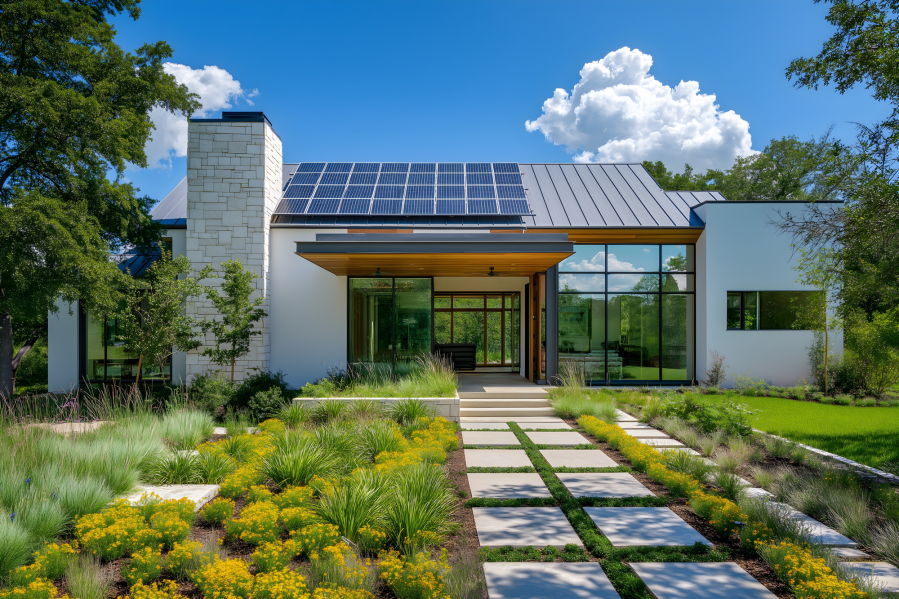
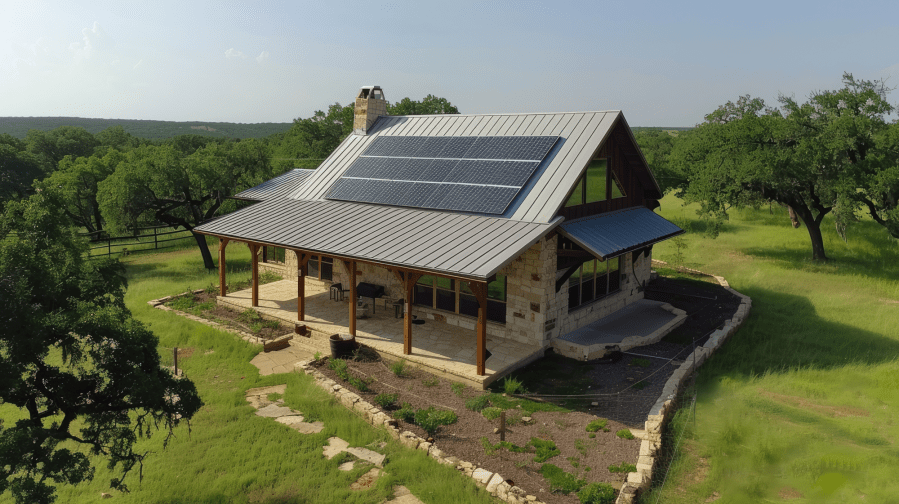
Generation of solar power is a no-brainer for anyone who is worried about the warming world, extended summer seasons, rising electric bills for cooling and harmful pollution from burning fossil fuels. Yes, we can’t meet all of needs from solar and other renewables, but it is allowing many countries in the world to reach clean energy goals.

Austin Energy‘s proposed Solar Standard Offer Program would add to the Community Solar program which allows residents to invest in solar-generated electricity without installing a solar system. It will allow more participants, including renters. Use of roof tops for solar has a benefit of reducing heat gain and reducing cooling loads .

Finding creative solutions to help us transition away from fossil fuels is what we want our lawmakers to pursue. Solar Standard Offer Program will create jobs and enhance quality of life. Let us support it.

Kalpana Sutaria

Project Manager, City of Austin and Member, Austin Metro Chapter, Citizen’s Climate Lobby

Published by the Austin American-Statesman

October 20, 2024

See also, “A new Austin solar program could unlock a clean energy future” by Kaiba White (October 12, 2024).

Clean energy

Keep Texas a Leader in Clean Energy Investments

In response to the August 18 op-ed, “By embracing free-market policies, Texas can be the leader in energy.”

Texas is already a leader in oil, gas and renewable energy production. It is the biggest emitter of greenhouse gas emissions in the U.S. Increased methane emissions from new natural gas power plants without adhering environmental measures will impact health and productivity of Texas workers.

The Inflation Reduction Act (IRA) provides investment incentives which would spur clean energy growth and reduce polluting emissions. According to E2, 334 major clean energy and clean vehicle projects were announced in the first two years of the IRA with $126 billion in investments and 109,000 jobs. Red states and GOP congressional districts are benefitting the most and Texas is one of top five states. The IRA also has incentives for agriculture, carbon dioxide removal and new technologies.

We want Texas to remain a leader in clean energy investments which are environmentally responsible to support growth, reduce polluting emissions and improve quality of life.

Kalpana Sutaria, Project Manager, City of Austin and Member, Austin Metro Chapter, Citizens’ Climate Lobby

Published by the Austin American-Statesman 

August 25, 2024

Electrify Your Home

Electrify Your Home: No Flames, No Fumes, No Fuss

This August, Citizens’ Climate Lobby is focused on one of its core issues: electrification.

But why should we electrify our homes?

  • With fossil fueled appliances in our home, the air we breathe inside is often dirtier than the air outside of them. Electrifying helps ensure your home is a safe haven, rather than a safety hazard.
  • Outdated, fossil fueled appliances use energy less efficiently, which drives up your energy usage – and your bills. When you electrify, your appliances will perform better and save you money in the long run.
  • Your wallet will thank you for electrifying your home. The incentives from the IRA: Inflation Reduction Act make it more affordable than ever. Don’t leave money on the table – take advantage of these incentives today!

CCL notes, “Fossil fuels are literally prehistoric. Bring your home into the modern age with electrification and reap the benefits of cleaner, safer energy.”

On a personal note, in the 1960s my Camp Fire troop in Southern California attended cooking classes at the local gas company. I have fond memories of those events, which were carefully orchestrated and enjoyable. Of course, we cooked on gas stoves. Today however, we know more about the health risks of gas appliances. Even the venerable chef Julia Child sang the praises of gas stoves. Vox notes in, “How the fossil-fuel lobby weaponized Julia Child’s gas stove” (November 2023):

Child had many stoves over her five-decade career, but she was famously devoted to one in particular: the Garland, a squat, six-burner gas range Child used in her home kitchen that cemented gas as her recommendation for professional and home chefs alike. The stove was so iconic that the Smithsonian has dedicated an exhibit to it.

KitchenAid shares a step-by-step guide to converting gas stoves to electric, should you be interested.

I notice that still today in Austin, there are apartment complexes being constructed with gas appliances. Some potential residents specifically look for complexes outfitted with gas appliances (see Every Austin Apartment with Gas Stoves by Everything Austin Apartments).

I am also a fan of historic home restoration and HGTV programs on that topic. The kitchens of historic homes are often outfitted with new versions of old gas stoves, so that they look just like the days when the homes were new. But is this safe?

Scientific American shares in, “The Health Risks of Gas Stoves Explained” (January 2023):

Gas stoves burn natural gas, which generates a number of invisible by-products. The biggest concern for human health is nitrogen dioxide (NO2). This gas is produced when natural gas is burned at high temperatures in the presence of nitrogen in the atmosphere, according to Josiah Kephart, an assistant professor in the department of environmental and occupational health at Drexel University. “We’ve known for a long time that [nitrogen dioxide] has many harmful effects on health,” he says.

Yet, some are still fighting to keep gas appliances in American homes. Vox notes:

In 2023, a mention doubting the safety of gas stoves made some politicians apoplectic. In January, the Consumer Product Safety Commission’s Richard Trumka Jr. set off a firestorm for raising the idea of a gas stove ban to which the Republican representative Ronny Jackson from Texas threatened “they can pry it from my cold dead hands.”

Maybe Hollywood – a key partner in the Julia Child and gas industry campaign back in the 1960s – can return to the topic of electrification, and encourage people to electrify their homes. Wouldn’t that be great!

Below you can download a helpful flier about electrifying your home courtesy of Citizen’s Climate Lobby. If you need more information, check out the CCL website and YouTube channel.

Carolyn M. Appleton, Citizens’ Climate Lobby volunteer (since 2017)

LTE Under Consideration: COP28 – Progress, Yes! But We Need More

Re: December 14, 2023, Statesman article, “Nations across globe agree to transition away from fossil fuels”

Nearly 200 nations agree for the first time to transition away from fossil fuels. A step in the right direction with spirit of cooperation but it is a small step. In 2015, nations agreed to limit global warming to 1.5 degree Celsius above pre-industrial times. Despite ramping up of renewable power and energy efficiency to reduce emissions, warming has reached 1.2 degrees Celsius above the mid 1800s. Temperatures are trending up, not stabilizing due to large amounts of COthat has collected in the atmosphere that would continue to warm even if we stop burning fossil fuels today.

Like the Paris Accord, these agreements by nations are non-binding and aspirational. The COP28 agreement allows loopholes to powerful oil producing countries.

What can citizens of these countries do?  Reach out to your lawmakers, demand investments and policies to lower use of fossil fuels for improvement to health and well-being of people.

Kalpana Sutaria

Project Manager, City of Austin and Austin Metro Chapter, Citizens’ Climate Lobby

Submitted to the Austin American-Statesman

December 14, 2023

Earth Day 2023

We all deserve to breathe clean air and drink clean water. There is nothing partisan about it. It was because of concerns about clean air and clean water that the Earth Day tradition began. Thousands of students and other groups fought against oil spills, pollution from factories and power plants, raw sewage, toxic dumps, pesticides, species extinction and loss of wilderness. The first Earth Day was celebrated on April 22, 1970. Republicans and Democrats, rich and poor, urban and rural dwellers, farmers, business and labor leaders came together demanding better environment.

By the end of 1970, the United States Environmental Protection Agency was created and the U.S. Congress passed environmental laws including the National Environmental Education Act, the Occupational Safety and Health Act and the Clean Air Act and in 1972 it passed the Clean Water Act. These laws have saved lives, improved air quality and health.

For two decades, concerns about increased use of coal, oil and gas were raised by not only NASA’s climate scientists but by ExxonMobil’s own scientists. Increased use of coal, oil and gas added pollutants including carbon dioxide (CO2) in the air. In 1988, Dr. Hansen testified in the U.S. Congress expressing concerns of global warming. By 1990, Earth Day was globally celebrated by nations for global action. Since the beginning of the Industrial Revolution, human activities have produced 40 percent more atmospheric concentration of CO2, from 280 ppm to 414.7 ppm in 2021. Carbon dioxide emissions reached record high in 2022.

Seventeen out of eighteen warmest years have occurred since 2001 according to NASA.

As concentrations of CO2 and other greenhouse gas emissions increase in the atmosphere, extreme weather events have intensified, our climate has destabilized and pollutants and pollen counts have gone up. Austin is known for problems of pollen allergies throughout the year. Pollen allergies have become much worse with increase in CO2, warmer temperatures and tail pipe emissions resulting from traffic congestion. Austin had 25 “Ozone Action Days” in 2022 which tops the combined total for past eight years. Short term measures like reduction in use of gasoline powered vehicles, equipment and manufacturing and long term measures like transitioning to cleaner energy sources are needed to reduce warming and ground level ozone. People suffering from pollen allergies feel the effects of ground level ozone along with increase in pollens from ragweed, grass, mold, trees and other pollutants. Sneezing, headaches, post nasal drainage and general sense of tiredness are the symptoms that I suffer from, even after taking appropriate measures.

Texas is a leader in oil and gas production. A non-profit group, Carbon Mapper has detected methane leaks near drilling sites in Texas. Methane has more than 80 times the warming power of CO2 for 20 years after its release. Methane emissions cause 25% of global warming today. Lack of enforcement of permitting rules on oil and gas operations continue to add to global warming by releasing methane into our environment.

Texas faces many water issues including groundwater pollution, aging infrastructure, drought and flooding. Abandoned oil and gas wells are polluting Texas farms, ranches, and underground water. Texas Railroad Commission (TRCC) which oversees orphan wells in Texas, has reported 140,000 inactive wells. Until these wells are plugged, water contamination is likely to get worse affecting health of humans and cattle.

Clean air and clean water are critical and so are reductions in polluting emissions. There are policy proposals introduced in the U.S. Congress to transition towards clean energy sources but we need a political will and bipartisan approach to drive this transition for improved quality of life for all.

Kalpana Sutaria

Project Manager, City of Austin and Member, Citizens’ Climate Lobby Austin

April 20, 2023

LTE Under Consideration: Ask lawmakers to support policies to promote clean energy to reduce CO2 emissions

Re: March 3, 2023 article, “Carbon dioxide emissions reached a record high in 2022”

Scientist Charles Keeling started taking measurements of atmospheric carbon dioxide (CO2) at Mauna Loa every day since 1958. His laboratory provided a continuous record showing the upward trajectory. Consumption of fossil fuels drives up the CO2 emissions every year. The only exception was in 2020 due to reduction in travel during the Pandemic.

Once added, CO2 stays in the atmosphere for 300 to 1000 years. CO2 emissions reached a record high in 2022 despite increase in solar and wind power generation. CO2 and other greenhouse gas emissions block the heat from escaping causing global warming. Climate scientists have shown how warming intensifies extreme weather events which devastate our lives and livelihoods in different ways. Allergies and pollution have affected me greatly.

Ask your lawmakers to support policies to promote clean energy to reduce CO2 emissions. It indeed is a monumental task but sorely needed to improve our health and wellbeing.

Kalpana Sutaria

Project Manager, City of Austin and Member, Citizens’ Climate Lobby Austin

Submitted to the Austin American-Statesman

March 2023

Carbon fee and dividend still needed in the climate war 

Published as, “Opinion: More legislation needed in the global warming fight”

Climate activists celebrated the August 2022 passage of the Inflation Reduction Act for its many provisions dealing with climate. True, those provisions were watered down in order to secure passage, and they are far less than what is needed. But that it passed at all was a big surprise, after previous hopes for legislative climate action had been dashed.

However, more comprehensive climate legislation is still much needed, as we are badly losing the war on global warming. In the Paris Accords of 2015-16, 196 nations pledged to pursue efforts to limit earth’s temperature increase to no more than 2.7°F (=1.5°C) above pre-industrial levels — with a fallback ‘in case we fail’ goal to limit warming to less than 3.6°F (2°C). Worldwide greenhouse gas emissions (GGE) are at their highest atmospheric concentrations and emissions levels ever recorded, and they are projected to continue rising for at least several years. Virtually no climate science expert believes we will achieve the Paris 2.7°F goal.

There is no question that the U.S. cannot resolve the global warming problem by itself. All nations (especially China) need to take immediate action to slash their greenhouse gas emissions. But this should not dissuade the U.S. from taking responsibility to deal with our own emissions. As leader of the free world and historically the highest emitter of greenhouse gases, we bear a special responsibility to lead by example.

Granted, compared to previous decades, recent U.S. progress in switching away from fossil fuels seems impressive. It is simply not fast enough. U.S. greenhouse gas emissions (all greenhouse gases, not just CO2) decreased by only 2 percent from 1990 to 2021. We need additional federal policy to accelerate reduction of our greenhouse gas emissions.

What is needed is a ‘carbon fee and dividend’ policy, which places a fee on greenhouse gas emissions and returns those fees to taxpayers. This approach has been endorsed by a large number of businesses (including Exxon-Mobil), prominent individuals and organizations (e.g., the Climate Leadership Council, whose members include 27 Nobel Laureate economists, and over 3,000 U.S. economists). Carbon fee and dividend has the benefits of being the climate policy that involves least government intrusion in the affairs of business and brings a positive cash flow to most taxpayers (both of which should make it the least objectionable option to members of Congress), and it will have a net positive long-term impact on the economy and jobs creation. The most important benefit is that, if crafted properly, it can be effective enough to achieve U.S. climate goals.

The wise man Yogi Berra purportedly said ‘It’s tough to make predictions, especially about the future.’ It is indeed tough to determine precisely how hot earth will end up getting because the answer depends almost entirely upon decisions we humans might or might not make: take immediate drastic action; do little or nothing; do something lukewarm in between. It is still possible we could limit warming to 2.7°F – but extremely improbable. All nations would have to take the immediate drastic action path; it won’t happen. The world is now on the ‘lukewarm’ path, one expected to lead to a 4.5-7.2°F rise by century’s end.

Yes, this is a wide range of uncertainty. But even if warming ends up at the low end of this range, it will be disastrous for humans and many other of earth’s plant and animal residents. There is zero uncertainty that we need to take more powerful action now to halt the warming. A carbon fee and dividend policy is the best option for the U.S. to address our greenhouse gas emissions problem.

Mark Warren

Member, Citizens Climate Lobby Austin Chapter

Austin American-Statesman

March 2023

Energy is ‘cheap’ only if you ignore the environmental costs

Re: Feb. 12 letter to the editor, “Liberals’ goal of implementing deal would drive up energy costs.”

The Texas Railroad Commission’s chair refers to Texas’ oil and gas as “cheap and reliable energy.” Leaving aside his claim of reliability, he can call Texas petroleum “cheap” only by ignoring the immense cost of its contributions to air pollution and climate degradation.

This is a classic market failure. Markets work properly only if prices reflect costs, and petroleum prices that omit its environmental costs amount to an enormous subsidy, giving fossil fuels an unfair advantage over clean energy sources such as wind, solar and nuclear.

To correct the market failure, the Energy Innovation and Carbon Dividend Act would correct the market failure by imposing a fee on fossil fuels. To avoid shocking the economy, the fee begins small and rises on a predictable schedule. To prevent hardship for low-income families, the fee’s proceeds are returned to American families, giving the plan its nickname, “Carbon Cashback.”

Hamilton Richards

Austin American-Statesman

February 18, 2022

‘Cheap energy’ is anything but; consider these recent examples

Re: Feb. 12 letter to the editor, “Liberals’ goal of implementing deal would drive up energy costs.”

Wayne Christian, the chair of the Railroad Commission, promises “access to cheap and reliable energy.” Unfortunately, “cheap” has turned out to be quite expensive.

Examples of what “cheap” has brought us include the 2011 Bastrop fire, Hurricane Harvey in Houston and the February 2021 winter storm. If we don’t change course, “cheap” will continue to get more expensive.

To avoid this escalation of costs, we need to reduce our consumption of fossil fuels, that simple. That’s what Biden’s Green New Deal is about.

Philip Russell

Austin American-Statesman

February 15, 2022