Bob Hendricks has been a volunteer for Citizens’ Climate Lobby for many years. He shares with us a call to participate in Sun Day in Austin, one of many sites across the nation participating in the annual event.
“Sun Day is a day of action on September 21, 2025, celebrating the power of clean energy. The clean energy revolution is here. Solar, wind and batteries are the cheapest form of power on the planet, lowering costs, creating new jobs, and strengthening our communities. But some politicians and industries are trying to hold it back.”
Bob notes that on September 21 at the Texas State Capitol, “we will celebrate the progress we’ve made and push for more. We’ll install new solar, host e-bike parades, give heat pump tours, and rally for change. Together, we’ll make the sun rise on our clean energy future.”
Bob heartily believes in the goal of Citizens’ Climate Lobby “to create the political will for a livable world.” Further he asks, “we value our volunteers’ time and resources. We ask for action only when it is timely and significant. I am now asking you who care about the future of our kids and grandkids, about the future of all kids and grandkids, about the future of civilization, to come to and support our September 21 Sun Day Austin rally and tabling event at the Texas State Capitol grounds from 4:00 to 6:00 p.m. on Sunday September 21.”
“We celebrate that solar energy especially, along with wind energy and battery storage, provides cheaper energy than fossil fuels – and is getting still cheaper. This is huge. Our economy gravitates towards cheaper and better so the transition to clean energy is certain. And that same solar energy is clean and will wipe out a major source of pollution that causes severe asthma and other illnesses for millions of people. This is worth celebrating.”
We also are calling people to action. “We see the effects of overheating the planet already in unprecedented destruction – flooding, heat waves, freak storms, wildfires. And the science, which predicted all this, tells us it will get worse and worse as we continue to dump more and more carbon pollution into our sky.”
Your attendance at Sun Day Austin or at any of hundreds of other Sun Day events, will send a message to policy makers that we, the people, know that solar energy is cheap and clean; that we know more solar will avoid even more increases in our electricity bills; and that more solar will greatly improve our health, especially for our more vulnerable, children, and seniors. It is a message that won’t change things immediately but will be an important step in the right direction.
We’re making Sun Day Austin a fun, inspiring and informative event. We’re hosting with our allies on September 21 at the Texas Capitol on the South Lawn. We will also have fun, children-focused events for the full time, so bring those kids and grandkids.
Please register, attend in person, and bring as many people as you can. We look forward to seeing you there.
Interested in volunteering? Email Bob Hendricks (bob.hendricks@citizensclimatelobby.org) or join the CCL secure conversation platform and message him securely there.
You might enjoy reading an opinion by Bob Hendricks that appeared in the Austin Chronicle in 2022, “Wake-Up Calls for Our Fossil Fuel Addiction.”
Environment Texas, “5 surprising facts about renewable energy growth in Texas” (October 2024).
Re: Oct. 13, article, ‘A new Austin solar program could unlock a clean energy future’
Generation of solar power is a no-brainer for anyone who is worried about the warming world, extended summer seasons, rising electric bills for cooling and harmful pollution from burning fossil fuels. Yes, we can’t meet all of needs from solar and other renewables, but it is allowing many countries in the world to reach clean energy goals.
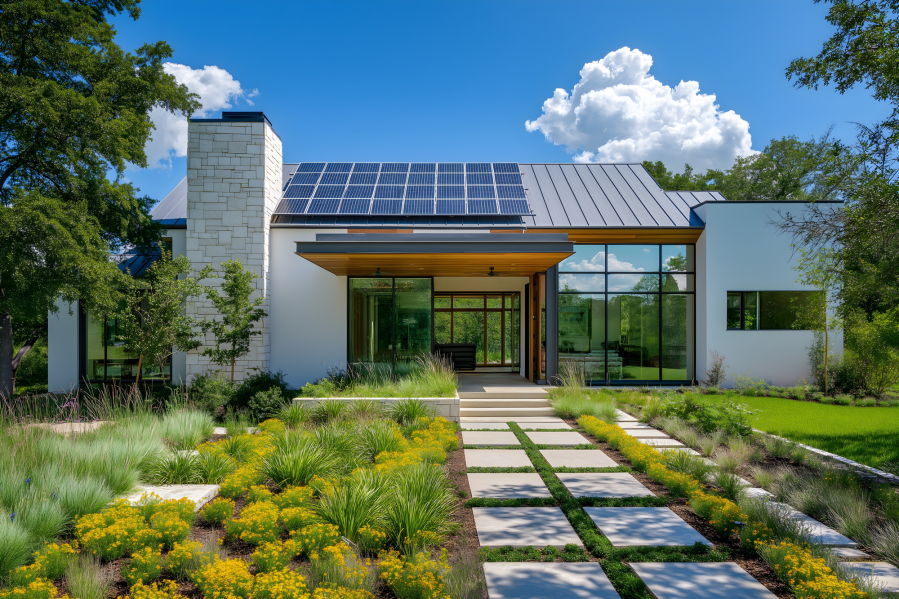
Austin Energy‘s proposed Solar Standard Offer Program would add to the Community Solar program which allows residents to invest in solar-generated electricity without installing a solar system. It will allow more participants, including renters. Use of roof tops for solar has a benefit of reducing heat gain and reducing cooling loads .
Finding creative solutions to help us transition away from fossil fuels is what we want our lawmakers to pursue. Solar Standard Offer Program will create jobs and enhance quality of life. Let us support it.
Kalpana Sutaria
Project Manager, City of Austin and Member, Austin Metro Chapter, Citizen’s Climate Lobby
Published by the Austin American-Statesman
October 20, 2024
See also, “A new Austin solar program could unlock a clean energy future” by Kaiba White (October 12, 2024).
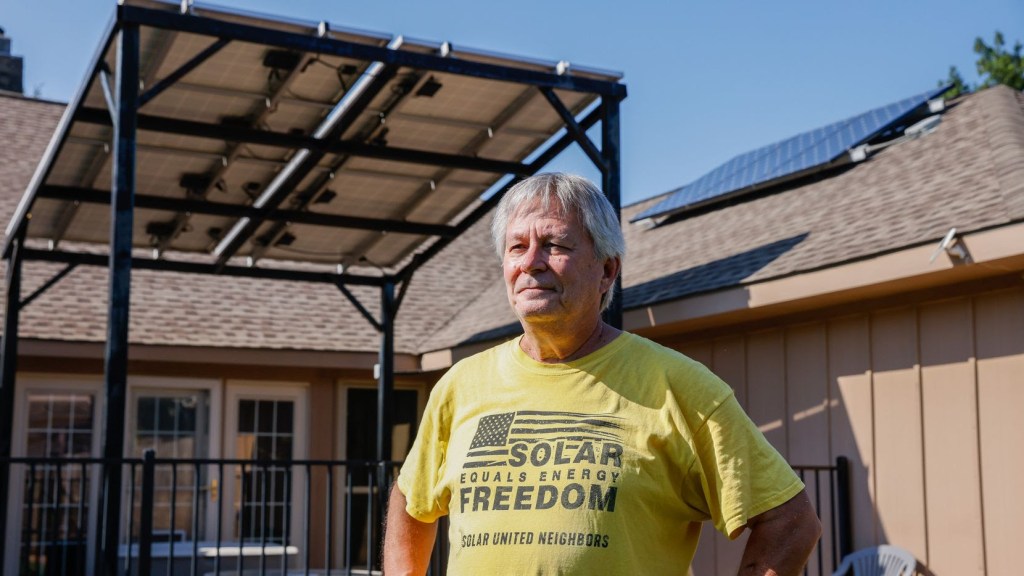
A decade ago, Larry Howe was drawn to solar energy and became an early adopter. He put solar panels on the roof of his Plano home in 2012 and, a few years later, added solar panels above his backyard patio to provide shade and power.
“We use the most air conditioning in the summer when the sun is shining,” he said. “So I thought: ‘Why not take advantage of generating some of that electricity right when I need it?’”
Similar ideas have won over millions of homeowners across the country.
The U.S. hit 1 million residential solar installations in 2016 and reached 2 million in 2019. By the end of June 2022, roughly 3.5 million residential solar installations were in place nationwide, according to a report by the Solar Energy Industries Association and research firm Wood Mackenzie.
More growth lies ahead. Last month, Congress approved a climate law that increases the tax credit on rooftop solar to 30% and remains in place for a decade. Texas’ residential solar capacity will grow five-fold by 2027, in part because of the tax break, the solar energy association said.
Many homeowners choose solar because of concerns about climate change and extreme weather. They want to reduce their carbon footprint and embrace clean energy.
Others want to cut their electric bills, and solar’s cost-benefit proposition has never been better. Electricity rates surged in the past year while the cost of solar panels has fallen sharply over the past decade. That combination shortens the payback period from investing in solar.
Texans have additional reasons to consider solar. After a 2021 winter storm shut down the grid for days and killed hundreds, some want to become more self-reliant and lighten the load on the grid.
When Howe first added solar panels, he knew just about every house that had them in his neighborhood.
“Now, every time I drive around Plano, I think: ‘I don’t remember that one,’” he said. “They’ve become almost commonplace, and that’s a great thing.”
Howe, who co-founded the volunteer group Plano Solar Advocates, has been tracking the number of rooftop installations statewide since 2014. He includes businesses such as big-box stores, but residential homes account for the vast majority.
Texas had over 160,000 rooftop solar projects in the fourth quarter of last year — more than double the number in 2019, according to data from Howe and the Texas Solar Energy Society.
Utility-scale solar, created by power providers in Texas’ deregulated market, accounts for the vast majority of solar generation here. Texas ranks low among states for the share of solar from residential, a metric that shows much room for growth.
“Small-scale solar” projects, as they’re often called, are coming on strong. They generated over 2.2 million megawatt hours of electricity in Texas last year, up from 1 million megawatt hours two years earlier, according to data from the U.S. Energy Information Administration.
The average value of solar panel shipments — a proxy for price used by the government — dropped nearly 83% from 2010 to 2021. That included an 11% decline last year despite supply chain constraints and higher material costs, the agency said.
Howe said he spent about $10,000 in out-of-pocket costs for his system, which totals 4.5 kilowatts. It generates about 60% of his electricity use annually and saves him roughly $100 a month on his electric bill.
In general, he said, homeowners can recoup their upfront solar investments in about 10 years. His payback period will be closer to 12 to 14 years because the cost was higher a decade ago and electricity rates were lower.
Howe helped create early solar co-ops that brought together local residents and leveraged their buying power for rooftop projects, and that approach continues. On Tuesday, the 2022 version of the Plano solar co-op was launched with the help of the nonprofit Solar United Neighbors.
“A lot of our work is to bring people together around their shared interests in learning about solar and the costs of installation,” said Hanna Mitchell, director of the group’s Texas program. “The co-ops are a large portion of that.”
By Wednesday, 30 people had signed on to learn more about solar panels and discounts from bulk buying. The goal is to attract 150 members by the end of November.
The co-op’s webpage is at solarunitedneighbors.org/plano, and information sessions are offered on Sept. 22 and Sept. 29.
Members will exchange information and evaluate vendors, eventually selecting a contractor to do installations for the group. In Plano, the average solar panel array is 8 kilowatts, capable of generating about 12,000 kilowatt hours of electricity a year, Mitchell said.
The average cost is about $20,000, including the co-op discount and before the federal tax credit. Co-op members typically get a discount of 10% to 20%, Mitchell said, and they’re under no obligation to buy panels or use the selected vendor.
“It’s a great way to inform yourself about solar, and the vendors have to be really transparent,” said Raul Lozano, a Plano homeowner since 2015. “And you’re probably going to get the best deal.”
Lozano was a member of last year’s Plano solar co-op, and he bought a 17-kilowatt system, much larger than average, for his 2,700-square-foot house. He said he paid about $32,000 before the tax credit and has been generating about 88% of his electricity in 2022.
“It’s over-performing,” Lozano said. “In some months, I wasn’t paying anything.”
That isn’t necessarily ideal because the value of excess generation is limited in Texas. The state does not require net metering, which pays homeowners the full cost of electricity when they pump excess power into the grid.
Most states, along with some large municipal utilities in Texas, have net metering policies that reward bigger generators.
While Lozano expects to recover his costs in about eight years, he said he can’t take full advantage of his system’s size.
“Whatever extra I produce is probably going to my neighbor’s home and the retailer is charging them,” Lozano said. “But I’m not getting paid.”
That leads to some unorthodox approaches to energy use. During the day, when demand is highest and Texas grid operators sometimes ask residents to cut back on power, both Lozano and Howe recharge their electric vehicles and run washers, dryers and dishwashers.
That’s because they may be generating more solar power than they’re using. And if they wait to charge the EVs at night, they must pay a higher retail rate.
At least 38 states have mandatory net metering rules, according to the Solar Energy Industries Association. Net metering strengthens the financial case for adding panels, but Mitchell said Texas lawmakers don’t like the idea.
“There’s more support for letting the market take care of it,” she said.
Larry Howe has been an outstanding volunteer with Citizens’ Climate Lobby. We wanted to share this information article and thank him for his leadership. This photo is by Lola Gomez and a link to the full article is below.



 Voices of Austin @CCLATX