

CCL Conservative Conference

Conservative Conference in Washington, D.C. and Preserving Clean Energy Tax Credits

Follow Up

Now that the conference is over, you might enjoy this panel discussion featuring CCL Congressional Liaison Manager Mindy Ahler, Action Team Director Drew Eyerly, and Vice President of Government Affairs Jenn Tyler. Mindy, Drew, and Jenn review the outcome of our annual Conservative Climate Leadership Conference and Lobby Day and answered questions about lobby meetings, asks, and the importance of sending right-of-center volunteers to meet with Republicans.

Original Post

Next week is the Citizens’ Climate Lobby Conservative Conference and Lobby Day in Washington, D.C. Right-of-center CCL volunteers will meet with Republican offices. Their primary request in the lobby day meetings will be to preserve the clean energy tax credits of the Inflation Reduction Act. And we will probably be defending the IRA’s clean energy tax credits for a while! Budget reconciliation takes a long time as all the spending and cuts get hammered out. This is an essential start to the process.

The resolution the United States House of Representatives just passed as we post this article, directs all the committees in the House to either spend or cut certain amounts from their budgets for the next 10 years. Remember, the budget reconciliation process is a partisan one and Republicans are in charge of it this time. So, it is strategically helpful that Republican offices will hear first from fellow conservatives on this issue.

CCL’s national office notes,

“Some energy provisions and regulations that relate to the clean energy tax credits would fall under the jurisdiction of the Energy & Commerce Committee, which as noted earlier, has to cut $880 billion. But tax credits themselves are in the jurisdiction of the Ways and Means Committee. That committee can spend an additional $4.5 trillion, but that amount is intended to extend the 2017 Tax Cuts and Jobs Act. So, when it comes to the clean energy tax credits, we’re likely to see a collaborative discussion across these key committees.”
CCL Conservatives

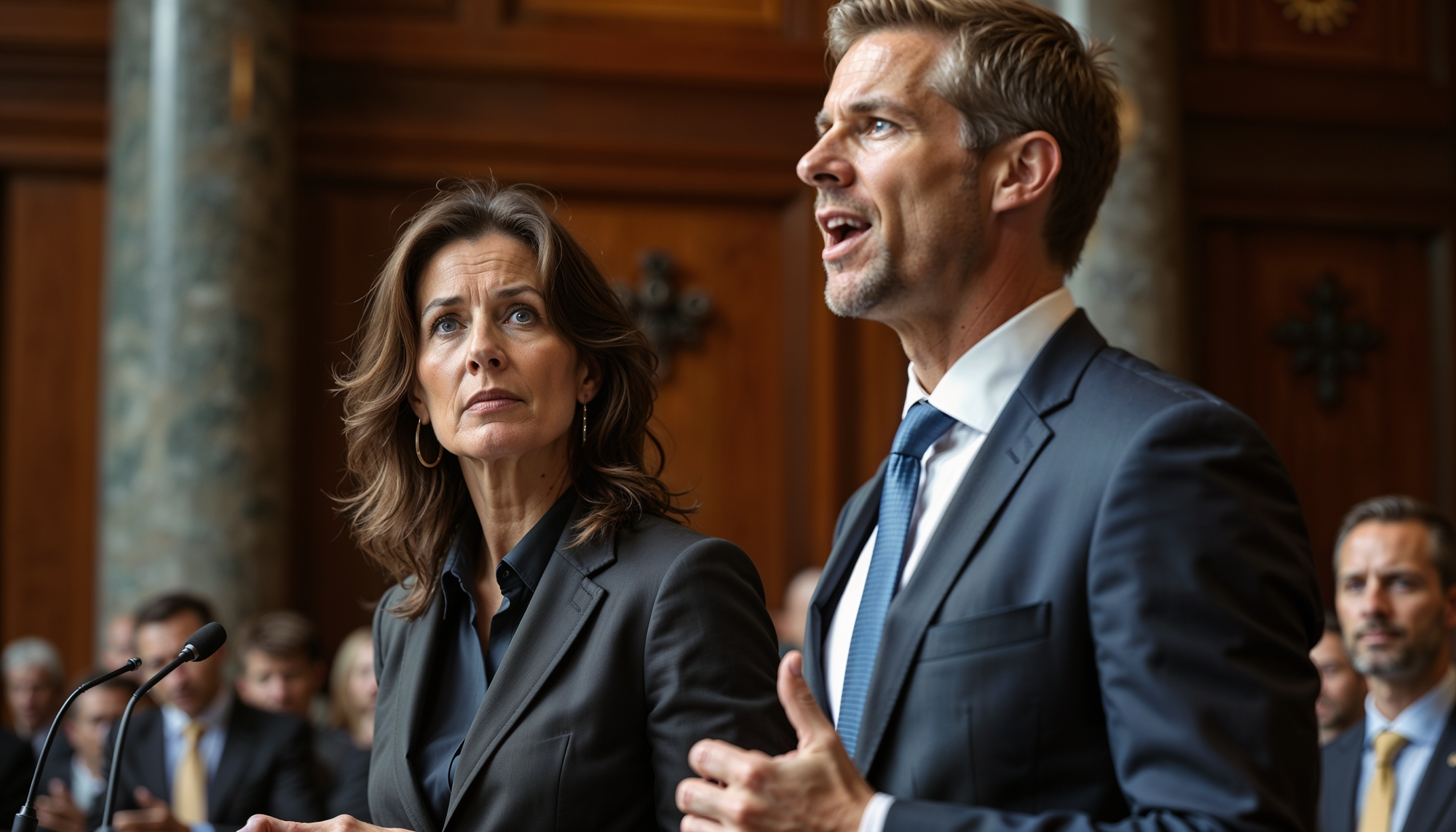
If you haven’t already joined Citizens’ Climate Lobby via its secure community platform, do so today! It is free to all, and once you sign up – including joining our “TX Austin” chapter – you will receive information direct to your inbox. Although registration for our Conservative Climate Change Leadership Conference and Lobby Day is now closed, you will definitely want to be following the proceedings and checking YouTube for any recordings that are posted there.

Follow-up actions for all volunteers including those in our TX Austin chapter will be shared by the staff of Citizens’ Climate Lobby as well. We need your help now more than ever!

Permitting Reform

Action Item: Ask Congress to Enact Further Permitting Reform

The summer 2024 Citizens’ Climate Lobby conference in Washington, D.C. was a great success. As part of that event, 442 information-packed meetings were held with elected officials.

Following up on those meetings, we need your help. Follow the link to email your elected officials to urge them boost transmission projects, improve early community involvement, and to speed up the pace with which the U.S. builds and deploys new clean energy projects.

This is a simple task but exceedingly important. For without permitting reform, roughly half of the potential carbon pollution reductions from the Inflation Reduction Act will be lost.

Just like you need a building permit to expand your home, big energy projects must get written approval from local, state, and/or federal authorities to start construction. There are three key parts to successful energy permitting reform:

    Right now, it takes an average of 4.5 years for federal agencies just to complete environmental impact statements for major energy projects. These are important assessments, but we need them to move faster and speed up the pace with which we build new clean energy projects. Congress took the first steps to address this in the June 2023 debt ceiling bill.

      Thanks to tax credits passed in the Inflation Reduction Act, development of new solar and wind energy projects will grow exponentially. But building them is only part of the challenge – they also need to be connected to the grid to move power to the houses and businesses that need them. Ultimately, we need to triple our current capacity to transmit clean electricity by 2050.

        Better permitting allows local communities to give their input on energy projects early in the process and choose good projects over bad ones. Good projects should be approved faster, harmful projects should be rejected faster, and all new projects should safeguard the lives and health of people living nearby.

        Thank you for taking the time to email your elected representatives!

        Reading

        LTE Under Consideration: Inflation Reduction Act’s First Anniversary

        This summer, we have experienced record breaking heat with drought conditions affecting all lives including the trees. It is particularly trying for children’s activities. We can do something about it now so that the children can enjoy a better environment.

        The Inflation Reduction Act (IRA) was signed into law by President Biden last year. It has encouraged investments in clean energy manufacturing projects creating upward of 170,000 jobs. There are rebates and tax credit available for homeowners to take advantage of solar panels, energy efficiency and electric appliances.  We need to tell our state leaders to get this benefits for Texans since federal dollars must pass through the state. Other “red” and “purple” states are already taking advantage of federal dollars.

        With massive clean energy investment possibilities in the IRA, we can lower harmful emissions, improve air quality and health, have respite from the heat and benefit of new jobs for workers.

        Kalpana Sutaria

        Project Manager, City of Austin and Member, Austin Metro Chapter, Citizens’ Climate Lobby

        Submitted to the Austin American-Statesman

        August 2023

        Carbon fee and dividend still needed in the climate war 

        Published as, “Opinion: More legislation needed in the global warming fight”

        Climate activists celebrated the August 2022 passage of the Inflation Reduction Act for its many provisions dealing with climate. True, those provisions were watered down in order to secure passage, and they are far less than what is needed. But that it passed at all was a big surprise, after previous hopes for legislative climate action had been dashed.

        However, more comprehensive climate legislation is still much needed, as we are badly losing the war on global warming. In the Paris Accords of 2015-16, 196 nations pledged to pursue efforts to limit earth’s temperature increase to no more than 2.7°F (=1.5°C) above pre-industrial levels — with a fallback ‘in case we fail’ goal to limit warming to less than 3.6°F (2°C). Worldwide greenhouse gas emissions (GGE) are at their highest atmospheric concentrations and emissions levels ever recorded, and they are projected to continue rising for at least several years. Virtually no climate science expert believes we will achieve the Paris 2.7°F goal.

        There is no question that the U.S. cannot resolve the global warming problem by itself. All nations (especially China) need to take immediate action to slash their greenhouse gas emissions. But this should not dissuade the U.S. from taking responsibility to deal with our own emissions. As leader of the free world and historically the highest emitter of greenhouse gases, we bear a special responsibility to lead by example.

        Granted, compared to previous decades, recent U.S. progress in switching away from fossil fuels seems impressive. It is simply not fast enough. U.S. greenhouse gas emissions (all greenhouse gases, not just CO2) decreased by only 2 percent from 1990 to 2021. We need additional federal policy to accelerate reduction of our greenhouse gas emissions.

        What is needed is a ‘carbon fee and dividend’ policy, which places a fee on greenhouse gas emissions and returns those fees to taxpayers. This approach has been endorsed by a large number of businesses (including Exxon-Mobil), prominent individuals and organizations (e.g., the Climate Leadership Council, whose members include 27 Nobel Laureate economists, and over 3,000 U.S. economists). Carbon fee and dividend has the benefits of being the climate policy that involves least government intrusion in the affairs of business and brings a positive cash flow to most taxpayers (both of which should make it the least objectionable option to members of Congress), and it will have a net positive long-term impact on the economy and jobs creation. The most important benefit is that, if crafted properly, it can be effective enough to achieve U.S. climate goals.

        The wise man Yogi Berra purportedly said ‘It’s tough to make predictions, especially about the future.’ It is indeed tough to determine precisely how hot earth will end up getting because the answer depends almost entirely upon decisions we humans might or might not make: take immediate drastic action; do little or nothing; do something lukewarm in between. It is still possible we could limit warming to 2.7°F – but extremely improbable. All nations would have to take the immediate drastic action path; it won’t happen. The world is now on the ‘lukewarm’ path, one expected to lead to a 4.5-7.2°F rise by century’s end.

        Yes, this is a wide range of uncertainty. But even if warming ends up at the low end of this range, it will be disastrous for humans and many other of earth’s plant and animal residents. There is zero uncertainty that we need to take more powerful action now to halt the warming. A carbon fee and dividend policy is the best option for the U.S. to address our greenhouse gas emissions problem.

        Mark Warren

        Member, Citizens Climate Lobby Austin Chapter

        Austin American-Statesman

        March 2023

        LTE Under Consideration: Adaptation decisions and financing adaptation increasingly essential

        Re: February 19, 2023 article, “How climate change can impact your finances?”

        As climate impacts accelerate, adaptation decisions and financing adaptation become increasingly essential to all communities, developed or developing countries. Property damages from hurricanes, floods, droughts, sea level rise, hail, wind, tornadoes and wildfires can devastate families when insurance companies are not able fully cover them. People with means could manage to withstand damages and even support funds that use environmental, social and governance factors. Others have to rely on government help.

        Inflation Reduction Act passed by the U.S. Congress has allocated funding if our state would take necessary steps. It would expedite electrification, fund climate-smart agriculture including conservation and reduce Methane to help lower harmful emissions that intensify climate disasters impacting our finances.

        We want state leaders to phase out fossil fuels subsidies and invest in clean energy instead of punishing financial institutions who support such transition. Our leaders can and should improve finances of Texans by addressing climate change.

        Kalpana Sutaria

        Project Manager, City of Austin and Member, Citizens Climate Lobby Austin Chapter

        Submitted to the Austin American-Statesman

        February 2023

        LTE Under Consideration: Beyond Texas Hospitality

        The lights and heat in my house are on tonight. I long took these services for granted. When Winter Sorm Uri struck, I learned that I can’t count on the infrastructure to keep me safe. This week, during an ice storm that left 171,000 Austin households without power, that lesson was reenforced.

        How can we protect ourselves? We can’t tame Mother Nature, but we can take action. The Inflation Reduction Act provides incentives to make our homes, businesses and appliances more energy efficient. When more of our homes and businesses use less energy, our homes will be a smaller drain on the grid and our energy will go further. As Texans always have, we can be good neighbors in crisis, but we can do more. We can reduce the impact of severe weather by taking advantage of the IRA and weatherizing our homes and businesses.

        Victoria Hendricks

        Member, Citizens’ Climate Lobby Austin Chapter

        Submitted to the Austin American-Statesman

        February 2023