With many years of hands-on work experience with nonprofit organizations focused on protecting the environment – many of those groups having influential conservative backers – I know there is conservative interest in protecting our shared natural resources. The way conservatives choose to accomplish that goal differs from some of our more progressive advocates for environmental protection, however.
Without an alternative approach to environmental policy, conservatives can feel boxed in, forced to claim environmental problems either are a “hoax” or not as serious as environmentalists claim. This is, indeed, sometimes the case. But where there is real pollution or other problems of environmental degradation, the standard conservative line of defense is untenable. Lacking effective policy alternatives, each fight over environmental issues that conservatives lose necessarily means more government expansion. For those who believe in the American ideals of freedom and free enterprise, the path ahead is one of slow but inevitable retreat.
How is the fight against climate change conservative? Through policies that avoid big government overreach, CCL advocates for legislation that spurs the economy, makes the country economically competitive, aids the military, provides resources to agriculture, and preserves the great American outdoors.
Citizen’s Climate Lobby supporters are organized into local chapters like ours, and each chapter works with their members of Congress to enact climate change solutions. Conservative CCL supporters hail from all over the country and from different religious backgrounds, but all share Conservative principles. If you are so-inclined, you might consider joining the CCL national Conservative Caucus Action Team, and attend its online meetings!
And consider attending the March 28 and 29, 2023 conference in Washington, D.C., which is focused specifically on conservative solutions to alleviate the negative effects of climate change.
Be in the room where conservative climate action happens. Come to the Conservative Climate Leadership Conference in Washington, D.C. (yes, in person), to connect with right-leaning CCLers, eco-right orgs, and members of Congress to discuss solutions that address climate, the economy, and U.S. competitiveness. You’ll become an expert on the conservative merits of CCL’s policy agenda and be ready to talk to House Representatives and Senators on day two, our lobby day on the Hill. This conference is designed for politically right-leaning attendees.
We in Central Texas got another gut punch from wintry weather. Although the grid provided enough gas and electricity, many of us jacked up our bills. Some have trouble paying those bills. There is a simple, cost-effective way to lower bills and to make the grid more resilient: make buildings more energy efficient such as with more insulation.
Better insulation helps the most when the weather is hottest or coldest. During those extreme periods, electricity demand is highest. Increasing insulation will lower demand for energy. That will save people money. It also means in a really extreme even, less energy will be needed. Also, strong insulation will keep people warmer during extreme winter storm and cooler during a summer heat wave. A colleague’s well-insulated home only dropped 10 degrees during winter storm Uri while in my house, it dropped 30 degrees.
Texas isn’t ready for another Uri. We haven’t fully winterized the grid. We need to fix the grid, and we can by insulating our homes better, taking advantage of tax credits and rebates, and urging the Texas legislature to pass several of the bills already introduced to improve energy efficiency all over the state. For our good.
The lights and heat in my house are on tonight. I long took these services for granted. When Winter Sorm Uri struck, I learned that I can’t count on the infrastructure to keep me safe. This week, during an ice storm that left 171,000 Austin households without power, that lesson was reenforced.
How can we protect ourselves? We can’t tame Mother Nature, but we can take action. The Inflation Reduction Act provides incentives to make our homes, businesses and appliances more energy efficient. When more of our homes and businesses use less energy, our homes will be a smaller drain on the grid and our energy will go further. As Texans always have, we can be good neighbors in crisis, but we can do more. We can reduce the impact of severe weather by taking advantage of the IRA and weatherizing our homes and businesses.
Re: February 5, 2023 article, “How can we best measure Methane?”
Methane has more than 80 times the warming power of carbon dioxide for twenty years after its release. Under the Inflation Reduction Act, the EPA is preparing to charge a fee, the first ever to reduce global warming, on the amount of methane released. How to measure the amount is a major dilemma.
Oil and gas companies have equipment to measure methane but they are not deploying them fully. Currently, they can pollute our environment without any consequences. They even burn excess hydrocarbons or use “flaring” which is allowed only for safety. This practice is widely prevalent in the Permian Basin which TCEQ could stop by enforcement of the current permitting rules.
If these companies don’t want to pay fees, they could follow the permitting rules and seal methane leaks and start a transition plan to clean energy methods to become a part of the solution to stabilize our climate.
I was inspired by watching a few of this year’s World Economic Forum proceedings online. I believe those involved are charting a positive course forward for the world at a high level, contrary to some public figures who have recently decried its usefulness.
The World Economic Forum (WEF) is an international non-governmental and lobbying organisation based in Cologny, canton of Geneva, Switzerland. It was founded on 24 January 1971 by German engineer and economist Klaus Schwab. The foundation, which is mostly funded by its 1,000 member companies – typically global enterprises with more than US$5 billion in turnover – as well as public subsidies, views its own mission as “improving the state of the world by engaging business, political, academic, and other leaders of society to shape global, regional, and industry agendas.”
Such a safe meeting format does need to exist for productive dialogue to occur amongst industrial, political, and social leaders. To make true change sink deeply into corporate and governmental systems, lighting cars on fire, throwing soup on priceless paintings, and smashing small business storefronts will not create a deep and lasting positive impact. But it will certainly scare everyone, at all levels of society. A quiet and secure environment for meaningful dialogue among those who can have significant impact on global systems – particularly those related to climate change – makes perfect sense.
I believe peaceful protest is a human right. “Nonviolent resistance has been shown empirically to be twice as effective as armed struggle in achieving major political goals,” notes the United States Institute of Peace. Yes, let us continue to protest, but peacefully. And I think we need to let go of the idea that everyone can participate in high level meetings like those of the World Economic Forum. WEF has made video recordings of its meetings available for remote viewers, and it publishes information about its accomplishments online routinely. Social media allows every human being with access to it, the opportunity to share opinions online. Let us all continue to share our opinions and concerns in this way, respectfully.
As the third Monday of January is celebrated as Martin Luther King, Jr. Day, I thought it would be appropriate to share MLK’s approach to nonviolence.
King did not experience the power of nonviolent direct action first-hand until the start of the Montgomery bus boycott in 1955. During the boycott, King personally enacted Gandhian principles. With guidance from black pacifist Bayard Rustin and Glenn Smiley of the Fellowship of Reconciliation, King eventually decided not to use armed bodyguards despite threats on his life, and reacted to violent experiences, such as the bombing of his home, with compassion. Through the practical experience of leading nonviolent protest, King came to understand how nonviolence could become a way of life, applicable to all situations. King called the principle of nonviolent resistance the “guiding light of our movement. Christ furnished the spirit and motivation while Gandhi furnished the method” (Papers 5:423).
Returning to Austin as I conclude, I was delighted to learn during this year’s WEF meetings, “World Economic Forum Launches the Centre for Trustworthy Technology.” The new Centre in Austin will “promote responsible production and use of emerging technologies such as artificial intelligence and machine learning, blockchain, virtual reality and quantum computing.” People everywhere are rightly concerned about how their data is used. “Societal trust in and acceptance of technology is dependent on the technologies in question being designed in an inclusive, ethical and responsible manner.” What better place to establish the new Centre than Austin, Texas!
Re: January 13 2023, Texas Tribune article, “EPA Moves away from Permian Basin air pollution crackdown”.
Texas leaders are determined to stop progress on measures to reduce air pollution by oil and gas operations in the Permian Basin no matter what it does to Texans’ health. Oil and gas companies have wielded their power for many years and continue to do that. the Biden administration is trying to lower oil prices after oil shortages around the world after the invasion of Ukraine by Russia. Oil companies have pressurized Texas leaders enough for the EPA to back down from air pollution crackdown.
We need policies that can reduce our dependence on oil and gas and encourage clean energy research and development. Ask your members of Congress to enact laws to transition away from pollution causing energy sources to clean energy that would lower ozone levels and improve air quality. I suffer from pollution regularly.
We want leaders who would work for their constituents’ health and well- being.
The year 2022 was a remarkable year for the climate.
The U.S. emissions went up by 1.3%
It was the 6th warmest year according to National Oceanic and Atmospheric Administration. It should have been cooler being a Le Nina year.
According to Dr. Hansen, 2022 was 0.04 degree Celsius warmer than 2021 likely because more energy is coming in than going out.
The 10-warmest years on record have occurred since year 2010.
The US had 18 one billion plus dollar climate disasters.
We had news to celebrate 2022. Inflation Reduction Act was the largest ever climate bill that was passed by the U.S. Congress. Volunteers of Citizens Climate Lobby have work to do by reaching out to the state and city governments and ensure that allocated federal dollars are invested in clean energy sources to bring the emissions down.
Re: October 15, 22 Article, “City sees record 25 Ozone Action Days”
People suffering from pollen allergies as I do, have an instant physiological effect when ground level ozone increases along with pollens from ragweed, grass, mold, trees and other pollutants. Sneezing, headaches, post nasal drainage and general sense of tiredness are the symptoms that I suffer from even after staying indoors.
It is alarming to have 25 “Ozone Action Days” in just 2022 which tops the combined total for past 8 years. Clearly, Austinites have to pay attention to the Ozone Action Days by taking measures like reduction in use of gasoline powered vehicles, equipment and manufacturing for the short term.
For the long term, we need to transition away from fossil fuels and polluting emissions and invest in clean energy sources. There are incentives in bills passed this year including the Inflation Reduction, Infrastructure and the CHIPs Acts. Continuing on the path will improve our health and quality of life.
We are surrounded by plastic. According to The International Union for Conservation of Nature, 300 million tons of plastic are produced every year for use in a wide variety of applications. At least 12 million tons of plastic end up in our ocean every year, and make up 80% of all marine debris found from surface waters to deep-sea sediments. Marine species ingest or are entangled by plastic debris, which causes severe injuries and deaths.
Plastic pollution threatens food safety and quality, affects human health, coastal tourism and contributes to climate change.
There are many options we have if we act and ask our leaders to enact laws to ban thin plastics. During my childhood, we rarely used plastic. Practice questioning every plastic item you use like bags, cups, straws, and Styrofoam containers to reduce plastic waste. Learn more about plastics at: IUCN.org and endplasticwaste.org
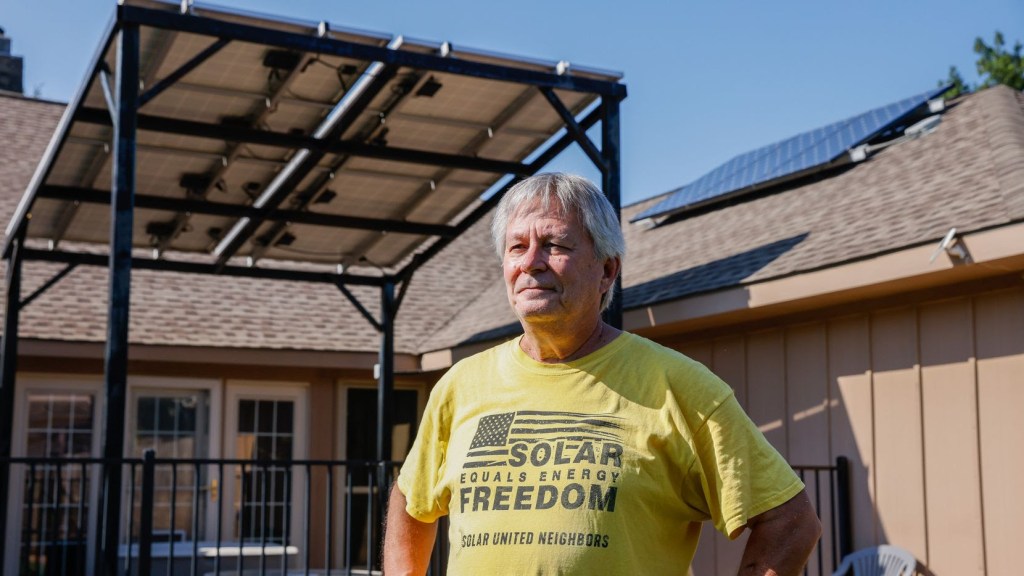
A decade ago, Larry Howe was drawn to solar energy and became an early adopter. He put solar panels on the roof of his Plano home in 2012 and, a few years later, added solar panels above his backyard patio to provide shade and power.
“We use the most air conditioning in the summer when the sun is shining,” he said. “So I thought: ‘Why not take advantage of generating some of that electricity right when I need it?’”
Similar ideas have won over millions of homeowners across the country.
The U.S. hit 1 million residential solar installations in 2016 and reached 2 million in 2019. By the end of June 2022, roughly 3.5 million residential solar installations were in place nationwide, according to a report by the Solar Energy Industries Association and research firm Wood Mackenzie.
More growth lies ahead. Last month, Congress approved a climate law that increases the tax credit on rooftop solar to 30% and remains in place for a decade. Texas’ residential solar capacity will grow five-fold by 2027, in part because of the tax break, the solar energy association said.
Many homeowners choose solar because of concerns about climate change and extreme weather. They want to reduce their carbon footprint and embrace clean energy.
Others want to cut their electric bills, and solar’s cost-benefit proposition has never been better. Electricity rates surged in the past year while the cost of solar panels has fallen sharply over the past decade. That combination shortens the payback period from investing in solar.
Texans have additional reasons to consider solar. After a 2021 winter storm shut down the grid for days and killed hundreds, some want to become more self-reliant and lighten the load on the grid.
When Howe first added solar panels, he knew just about every house that had them in his neighborhood.
“Now, every time I drive around Plano, I think: ‘I don’t remember that one,’” he said. “They’ve become almost commonplace, and that’s a great thing.”
Howe, who co-founded the volunteer group Plano Solar Advocates, has been tracking the number of rooftop installations statewide since 2014. He includes businesses such as big-box stores, but residential homes account for the vast majority.
Texas had over 160,000 rooftop solar projects in the fourth quarter of last year — more than double the number in 2019, according to data from Howe and the Texas Solar Energy Society.
Utility-scale solar, created by power providers in Texas’ deregulated market, accounts for the vast majority of solar generation here. Texas ranks low among states for the share of solar from residential, a metric that shows much room for growth.
“Small-scale solar” projects, as they’re often called, are coming on strong. They generated over 2.2 million megawatt hours of electricity in Texas last year, up from 1 million megawatt hours two years earlier, according to data from the U.S. Energy Information Administration.
The average value of solar panel shipments — a proxy for price used by the government — dropped nearly 83% from 2010 to 2021. That included an 11% decline last year despite supply chain constraints and higher material costs, the agency said.
Howe said he spent about $10,000 in out-of-pocket costs for his system, which totals 4.5 kilowatts. It generates about 60% of his electricity use annually and saves him roughly $100 a month on his electric bill.
In general, he said, homeowners can recoup their upfront solar investments in about 10 years. His payback period will be closer to 12 to 14 years because the cost was higher a decade ago and electricity rates were lower.
Howe helped create early solar co-ops that brought together local residents and leveraged their buying power for rooftop projects, and that approach continues. On Tuesday, the 2022 version of the Plano solar co-op was launched with the help of the nonprofit Solar United Neighbors.
“A lot of our work is to bring people together around their shared interests in learning about solar and the costs of installation,” said Hanna Mitchell, director of the group’s Texas program. “The co-ops are a large portion of that.”
By Wednesday, 30 people had signed on to learn more about solar panels and discounts from bulk buying. The goal is to attract 150 members by the end of November.
The co-op’s webpage is at solarunitedneighbors.org/plano, and information sessions are offered on Sept. 22 and Sept. 29.
Members will exchange information and evaluate vendors, eventually selecting a contractor to do installations for the group. In Plano, the average solar panel array is 8 kilowatts, capable of generating about 12,000 kilowatt hours of electricity a year, Mitchell said.
The average cost is about $20,000, including the co-op discount and before the federal tax credit. Co-op members typically get a discount of 10% to 20%, Mitchell said, and they’re under no obligation to buy panels or use the selected vendor.
“It’s a great way to inform yourself about solar, and the vendors have to be really transparent,” said Raul Lozano, a Plano homeowner since 2015. “And you’re probably going to get the best deal.”
Lozano was a member of last year’s Plano solar co-op, and he bought a 17-kilowatt system, much larger than average, for his 2,700-square-foot house. He said he paid about $32,000 before the tax credit and has been generating about 88% of his electricity in 2022.
“It’s over-performing,” Lozano said. “In some months, I wasn’t paying anything.”
That isn’t necessarily ideal because the value of excess generation is limited in Texas. The state does not require net metering, which pays homeowners the full cost of electricity when they pump excess power into the grid.
Most states, along with some large municipal utilities in Texas, have net metering policies that reward bigger generators.
While Lozano expects to recover his costs in about eight years, he said he can’t take full advantage of his system’s size.
“Whatever extra I produce is probably going to my neighbor’s home and the retailer is charging them,” Lozano said. “But I’m not getting paid.”
That leads to some unorthodox approaches to energy use. During the day, when demand is highest and Texas grid operators sometimes ask residents to cut back on power, both Lozano and Howe recharge their electric vehicles and run washers, dryers and dishwashers.
That’s because they may be generating more solar power than they’re using. And if they wait to charge the EVs at night, they must pay a higher retail rate.
At least 38 states have mandatory net metering rules, according to the Solar Energy Industries Association. Net metering strengthens the financial case for adding panels, but Mitchell said Texas lawmakers don’t like the idea.
“There’s more support for letting the market take care of it,” she said.
Larry Howe has been an outstanding volunteer with Citizens’ Climate Lobby. We wanted to share this information article and thank him for his leadership. This photo is by Lola Gomez and a link to the full article is below.